
Corpus Christi (June)
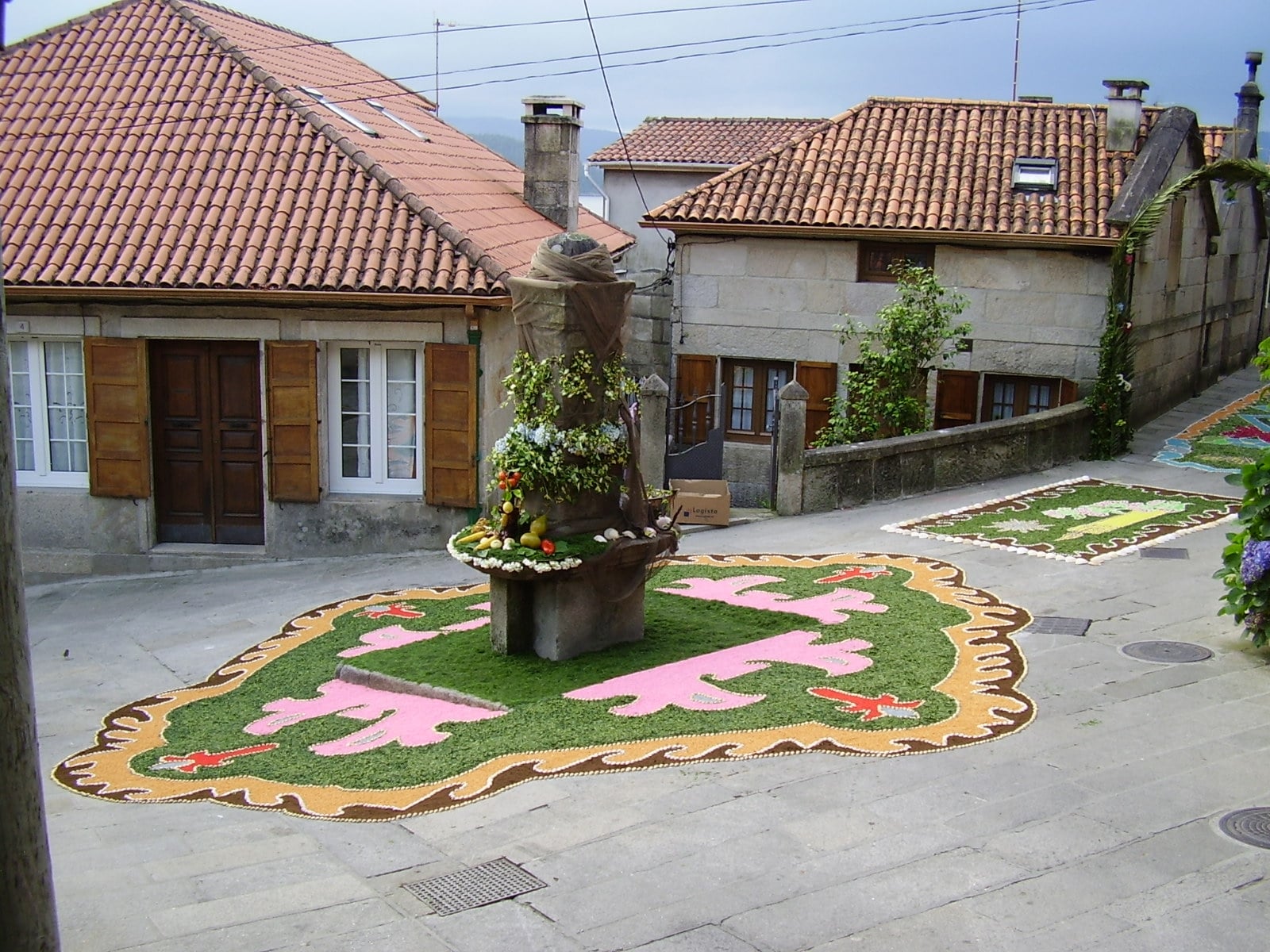
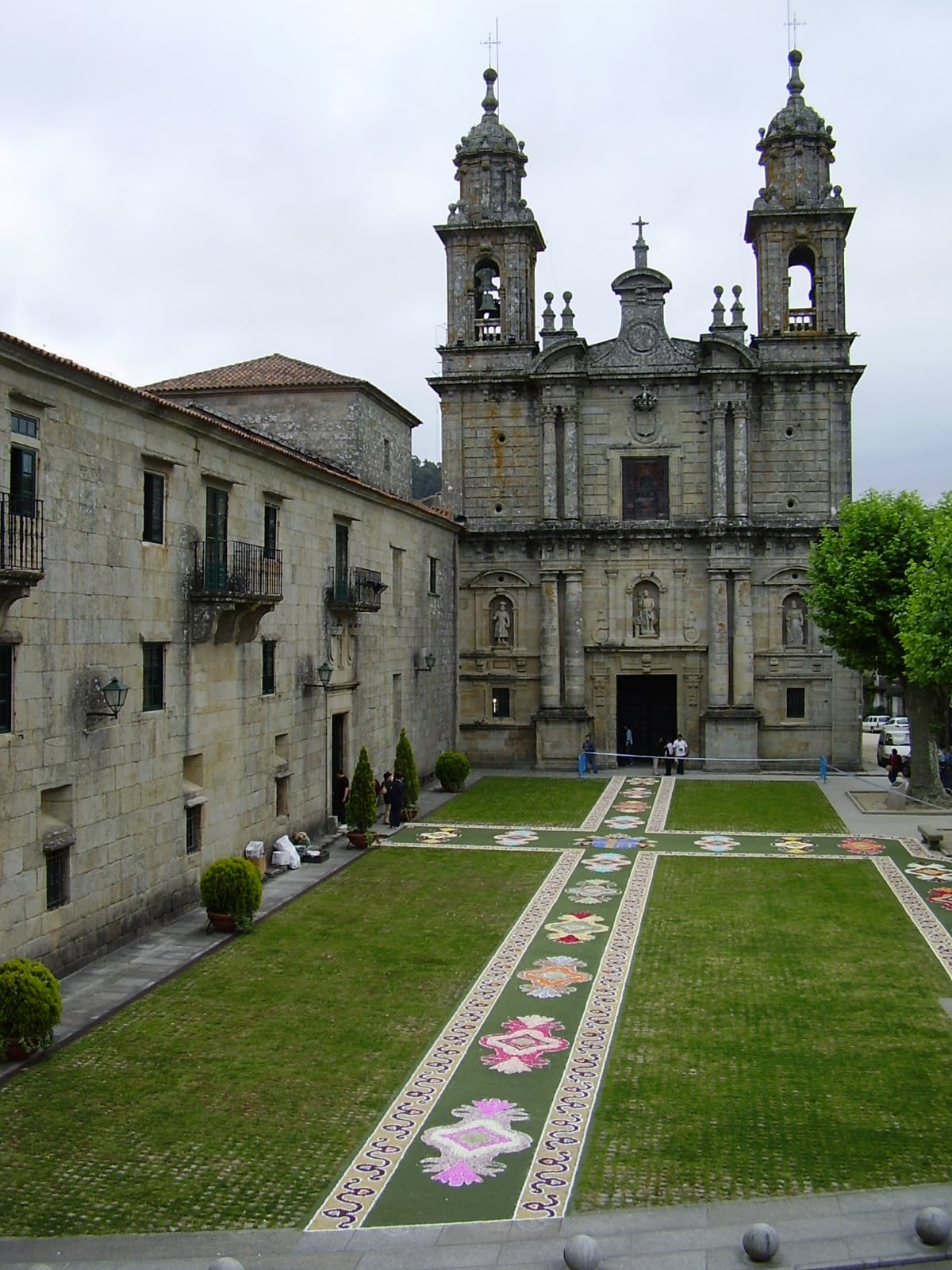
Religious festival to celebrate the Eucharist, which is especially important in the parishes of Combarro, Samieira, San Xoán, and San Salvador due to the floral carpets that adorn the streets and squares. In Combarro, the floral carpets decorate the streets of the Historic Quarter and the Camino Real to the church of San Bernardo. In the parishes of San Xoán and San Salvador, these ephemeral carpets are also made around the churches. In Samieira, one of the most outstanding events is the Baile del Ramo (Dance of the Branch), a tradition that dates back to the 19th century.
San Xoán (June 23 to 26)
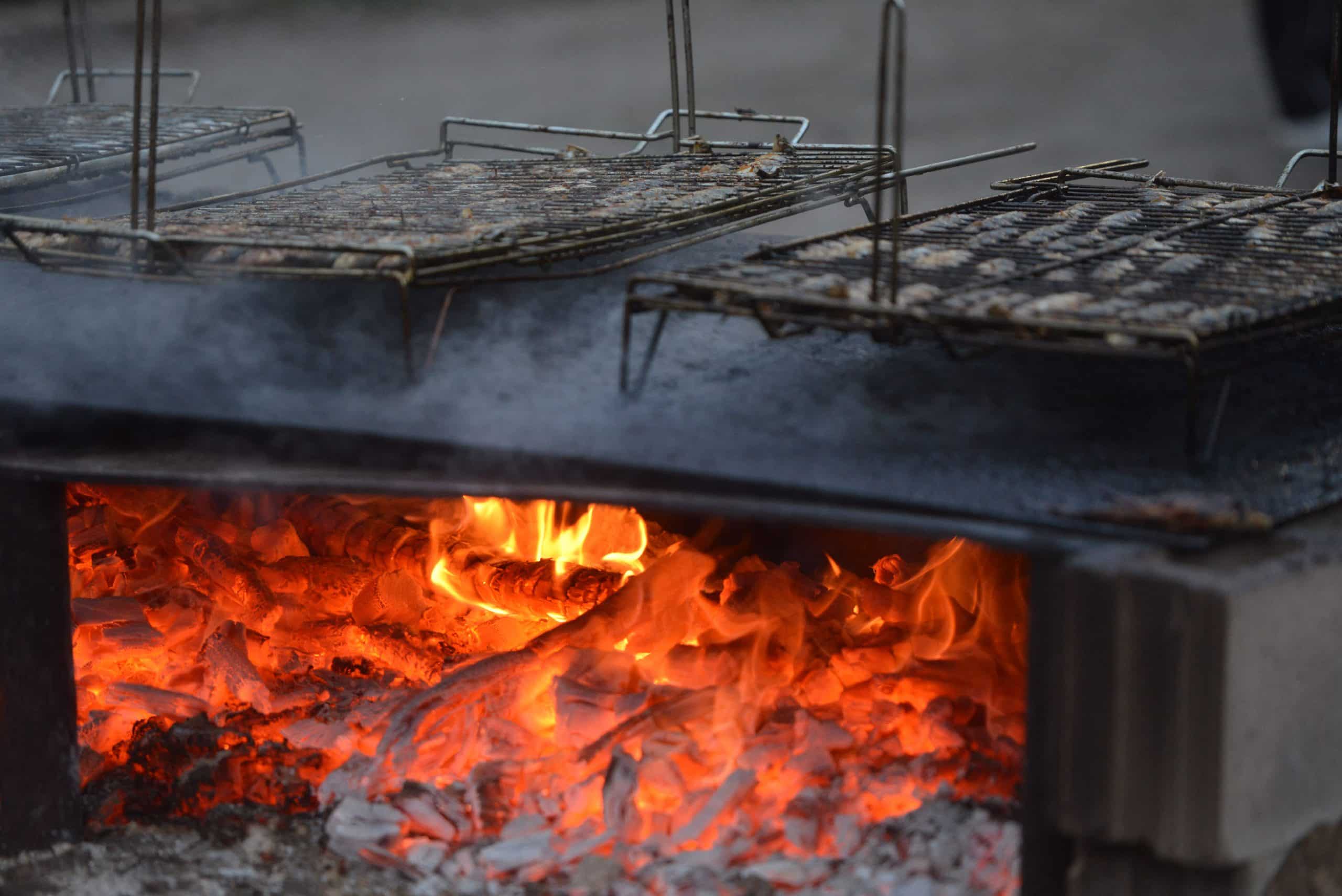
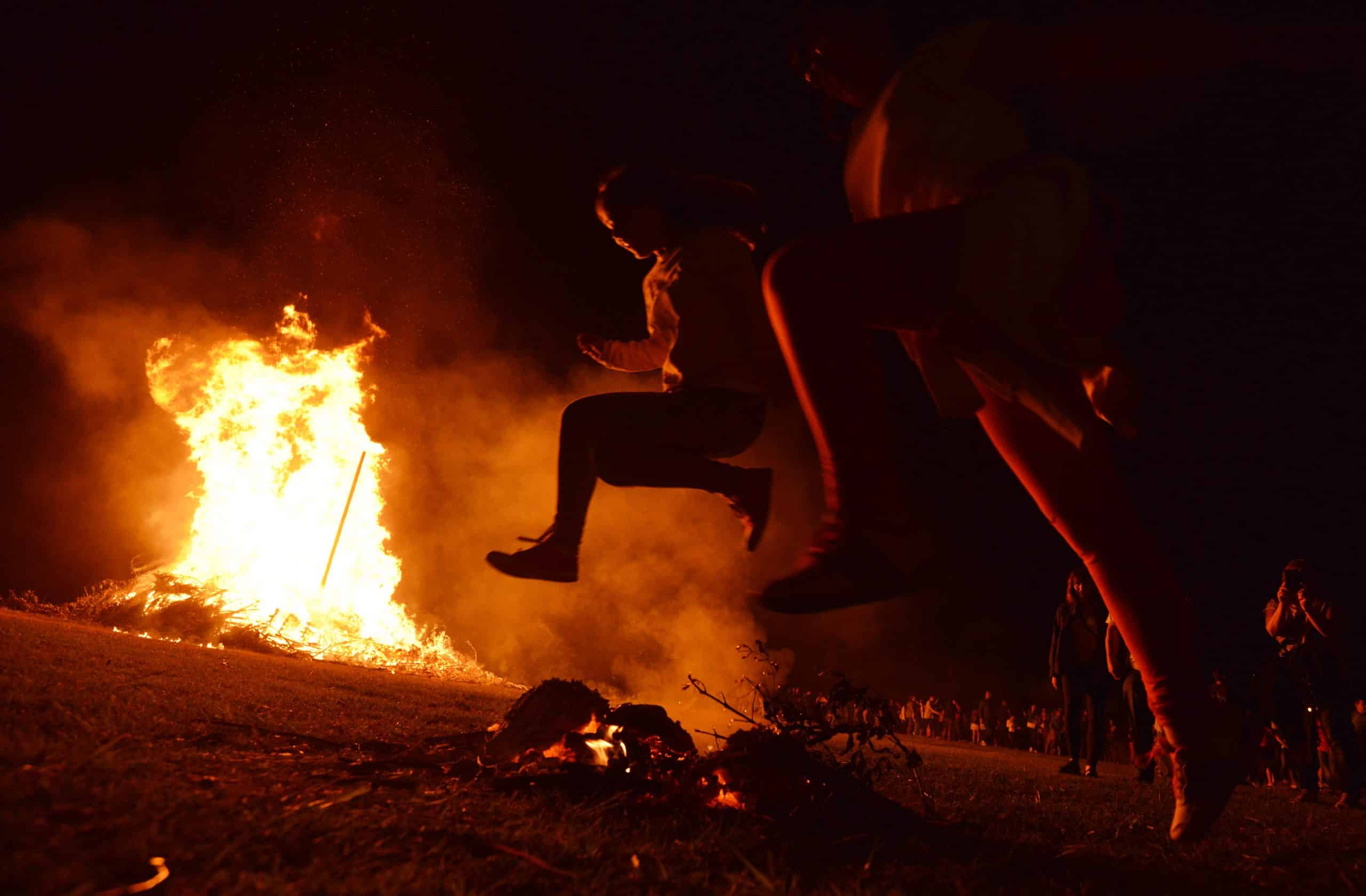
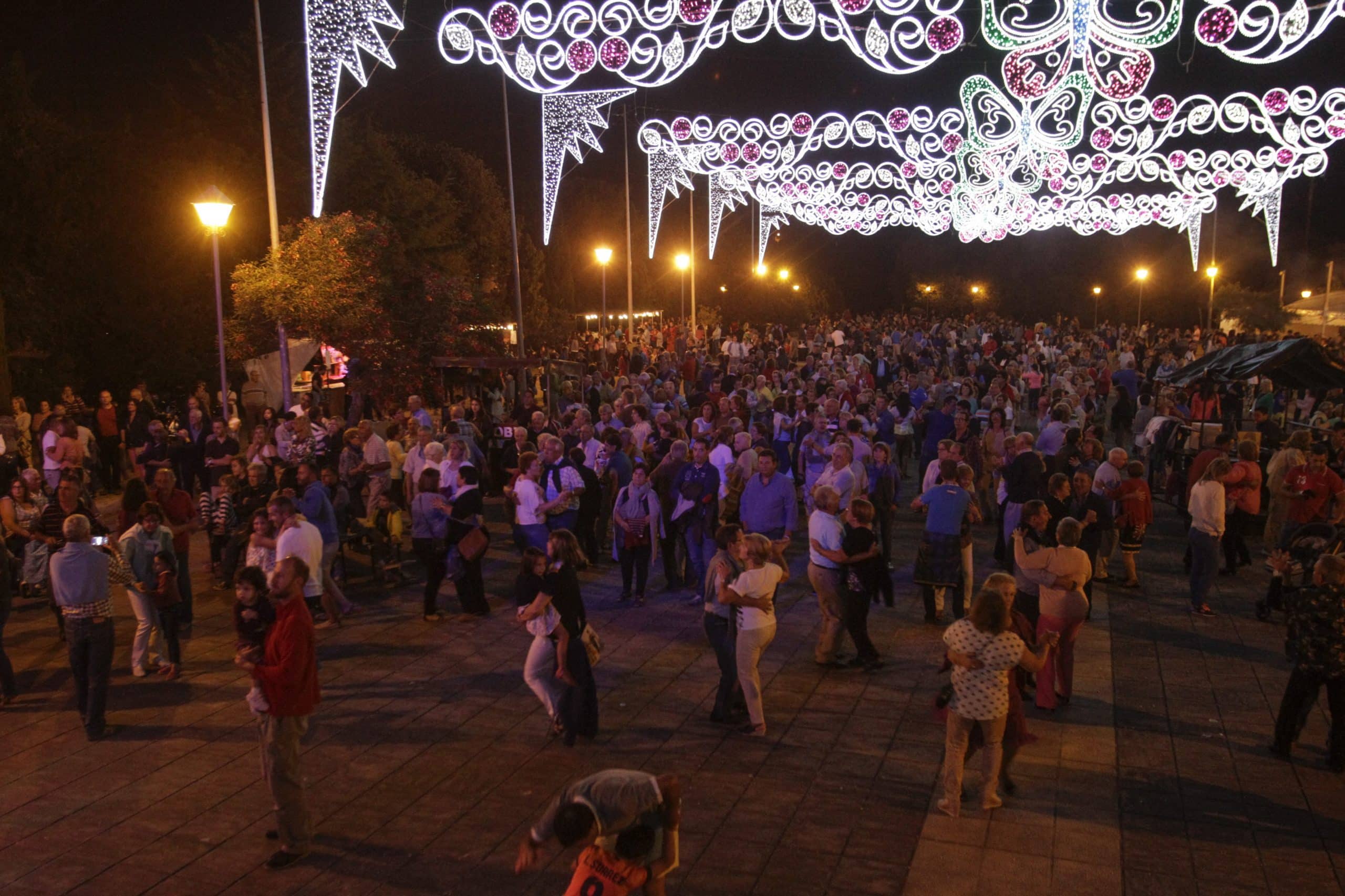
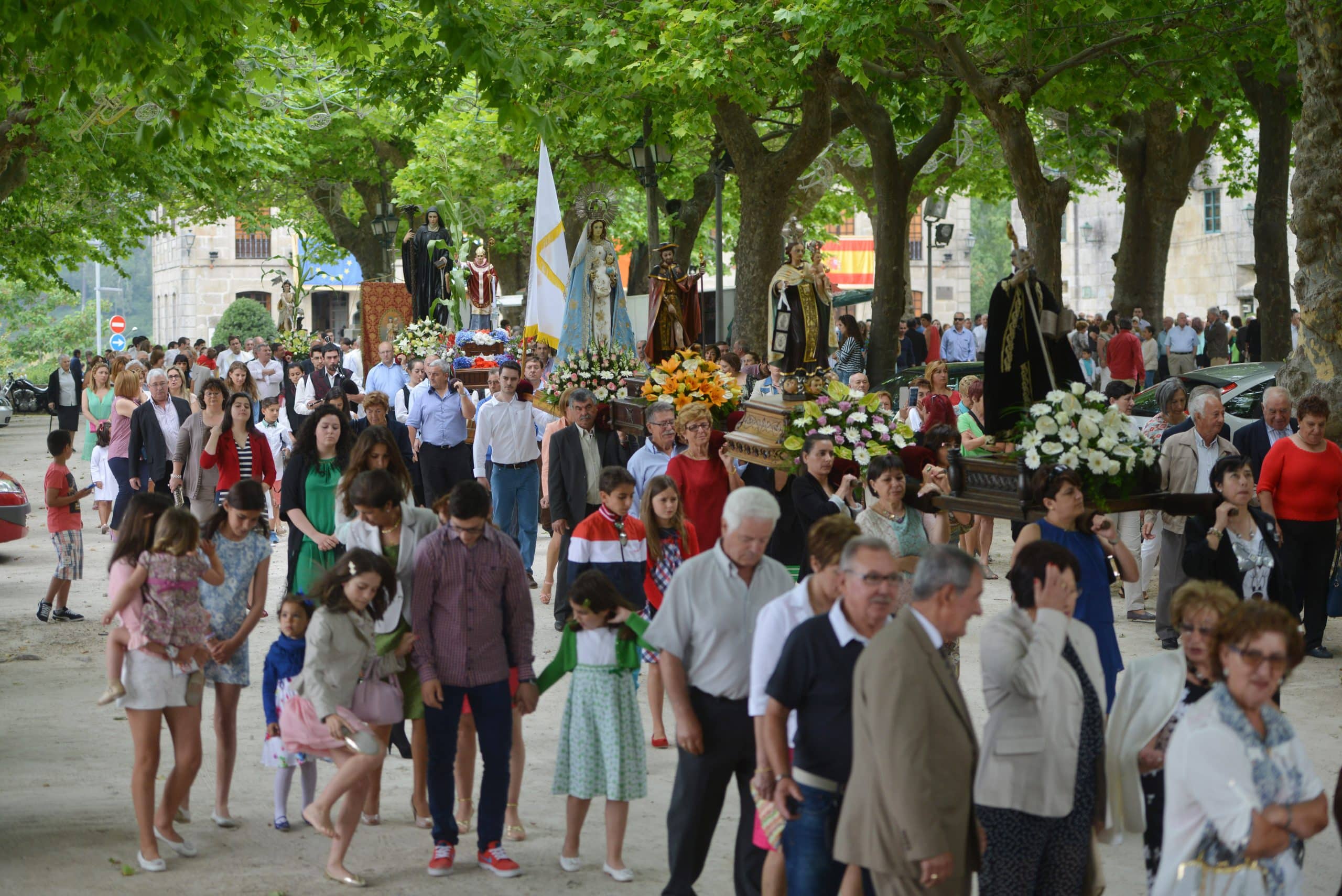
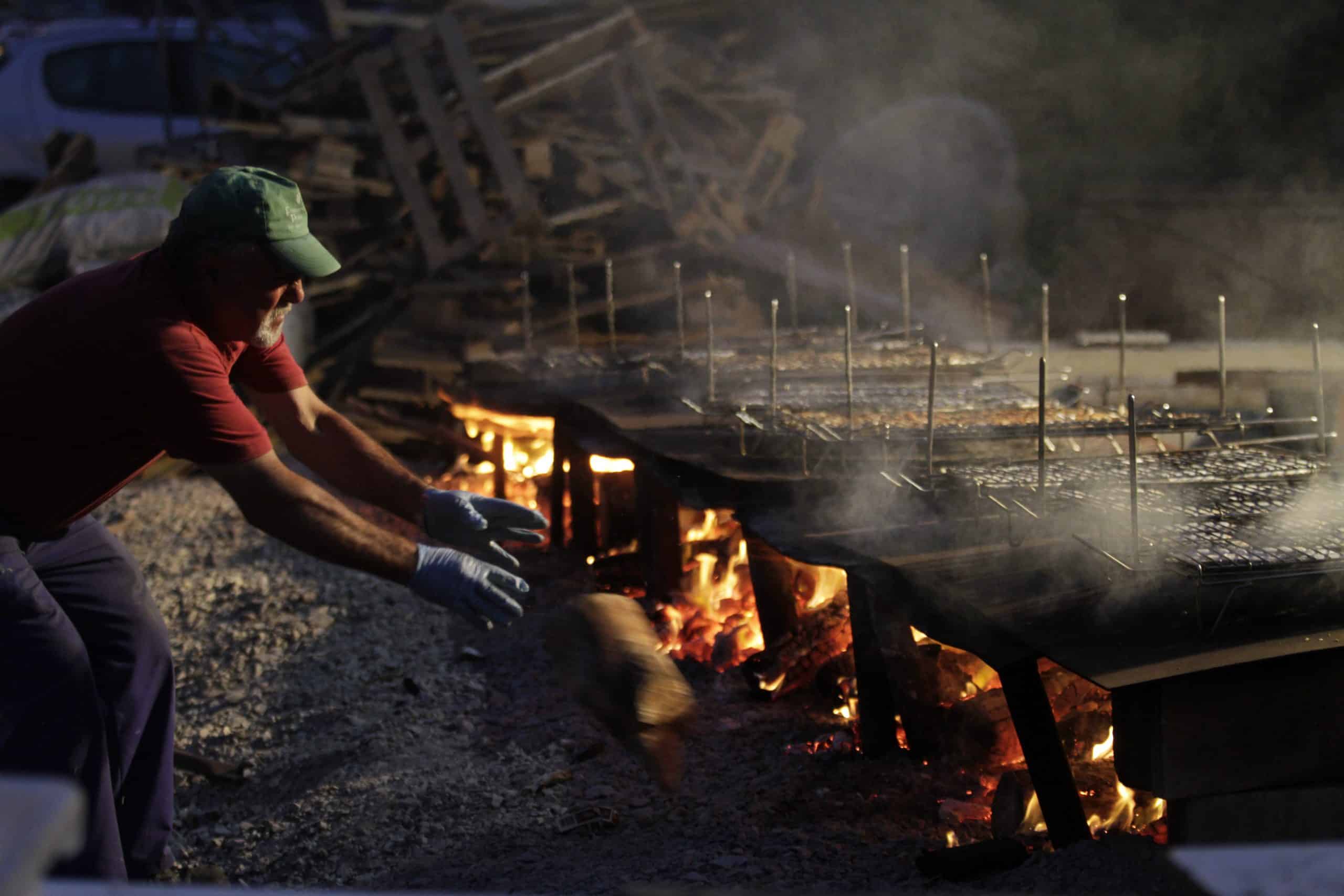
The Festival or Night of San Juan, the shortest of the year, is one of the most deeply rooted festivals in Galicia to welcome the summer at the solstice. Purification traditions and rituals are performed, such as lighting and jumping bonfires or washing with the water of the herbs of San Juan. In Poio, it is celebrated in a special way, as the Monastery was erected in honor of San Juan Bautista and they are the patron saint festivities of the municipality.
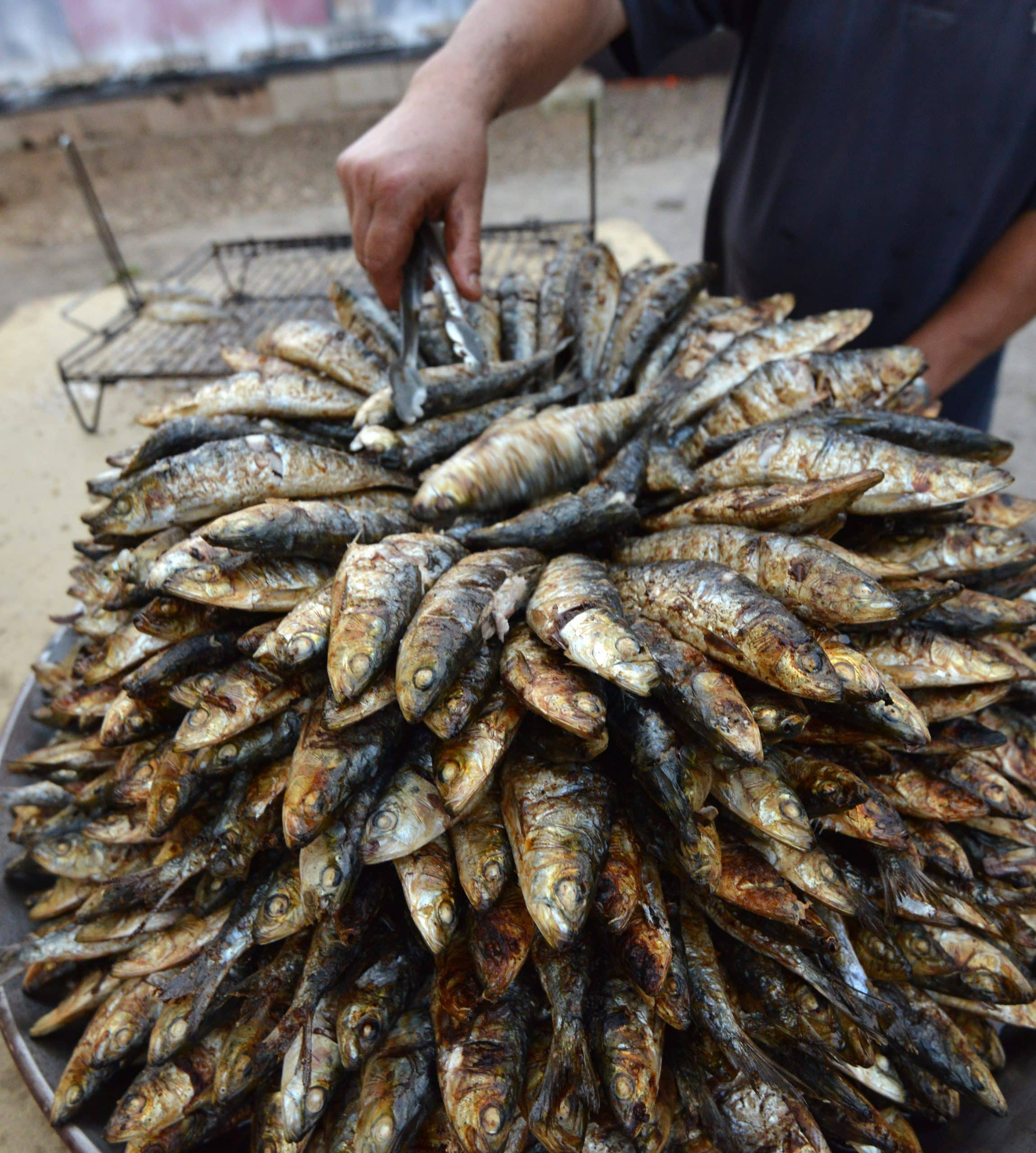
The celebrations begin on June 23 with the collection of herbs in the afternoon, and at midnight the bonfire is lit, accompanied by a popular sardine feast with cornbread and local wine, as well as a musical verbena.
The religious events take place in the church of the Monastery of San Xoán on the 24th (in honor of San Juan), 25th (in honor of Santa Trahamunda, patron saint of morriña), and 26th of June (in honor of San Fructuoso). At night, the A Seca esplanade hosts musical performances and festivals.
The Feast of De la Merced (September 23 and 24)
The devotion to Our Lady of Mercy dates back to the settlement of the Mercedarian Order in the Monastery of Poio in 1890. On September 23, around ten o’clock at night, a procession with the image of the Virgin leaves the old Sanatorio de la Merced (San Salvador), and in the last section of the road it joins the processions from the Nosa Señora de Fátima chapel of Campelo, and the church of San Bernardo de Combarro, to travel together the route to the Monastery of Poio. There, a night mass is celebrated after which roscón and queimada are distributed. On September 24, a local holiday, liturgical and festive events are also celebrated.
All the parishes of Poio celebrate festivals in honor of their patron saints and other saints, with alboradas, parades, masses, processions, and verbenas. Some of them are:
Festivals of the Divino Salvador de Poio (August 6 and 7)
San Roque de Combarro Festival (August 16)
San Gregorio de Raxó Festival (March)
San Antonio de Samieira Festival (June)
Mussel Festival (August 15)
Since 1994, the Ateneo Corredoira cultural association has organized, within the framework of its Cultural Week, the tasting of mussels in the Praza da Chousa de Combarro, on the eve of San Roque. This product of the estuary can be enjoyed in various preparations.
One of the most emblematic events is the meeting in the chapel located in the place of Xuviño to accompany the Virgen de la Renda in its traditional ‘descent’. It is a religious act that brings together dozens of faithful who, together with traditional music groups, accompany the procession to the temple of San Roque.
Callos Festival (2nd Sunday of September)
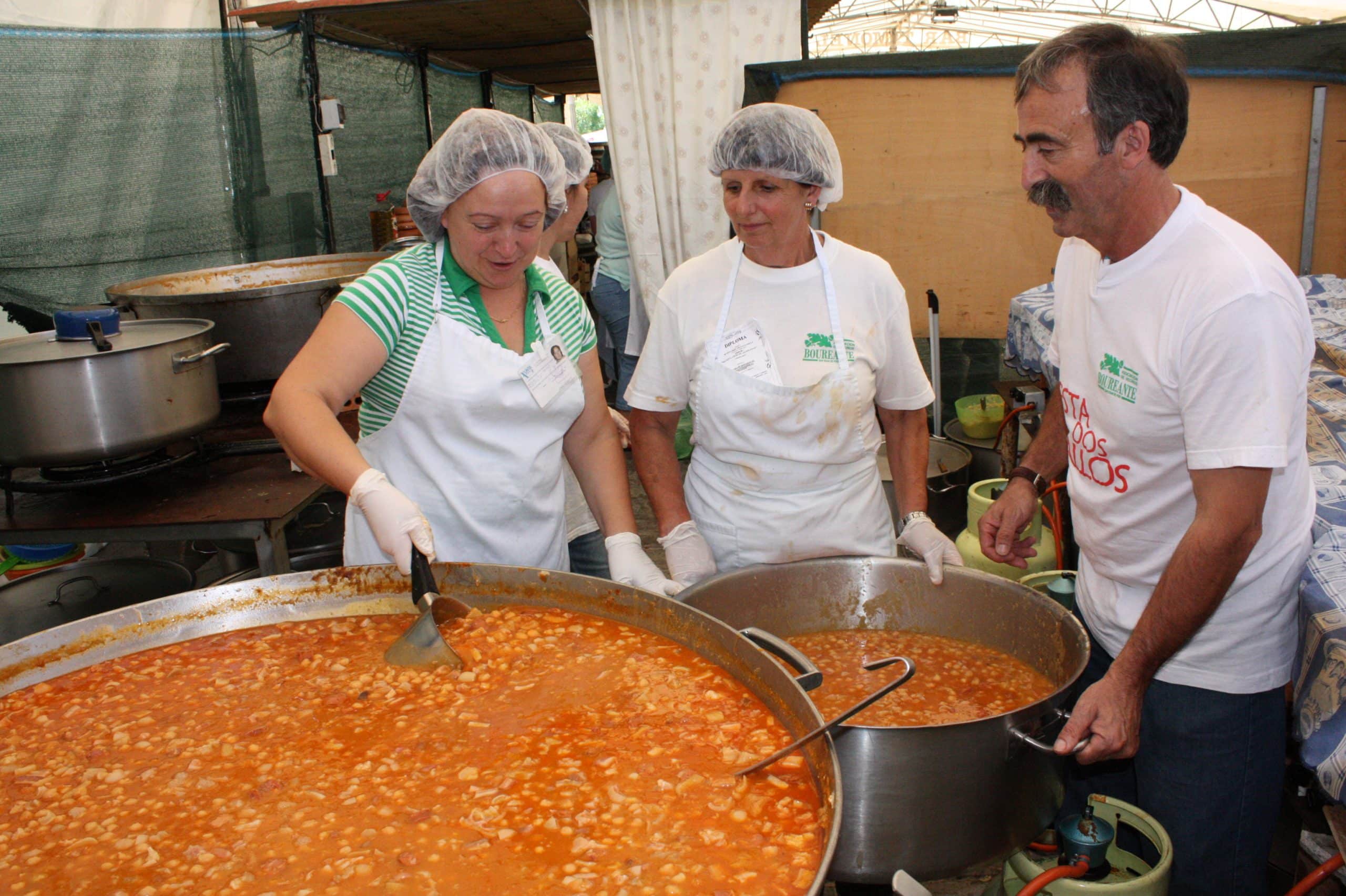
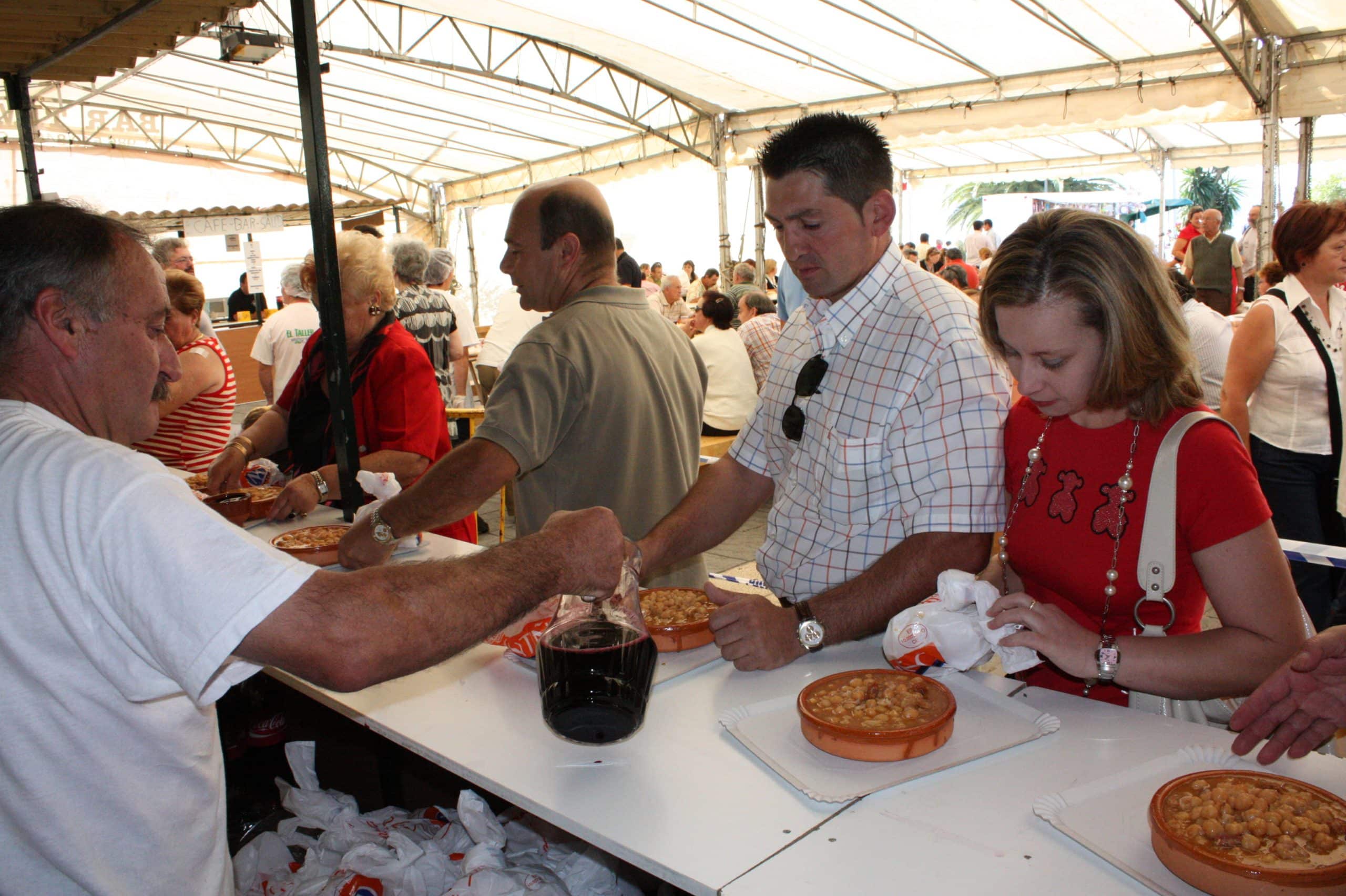
The A Seca esplanade (San Xoán) has hosted the Callos Festival since 2007, organized by the Asociación Vecinal Boureante. It consists of a tasting of this meat stew with chickpeas, and other gastronomic products at popular prices, entertainment, and traditional music.
Festa Da Ameixa (3rd Weekend of September)
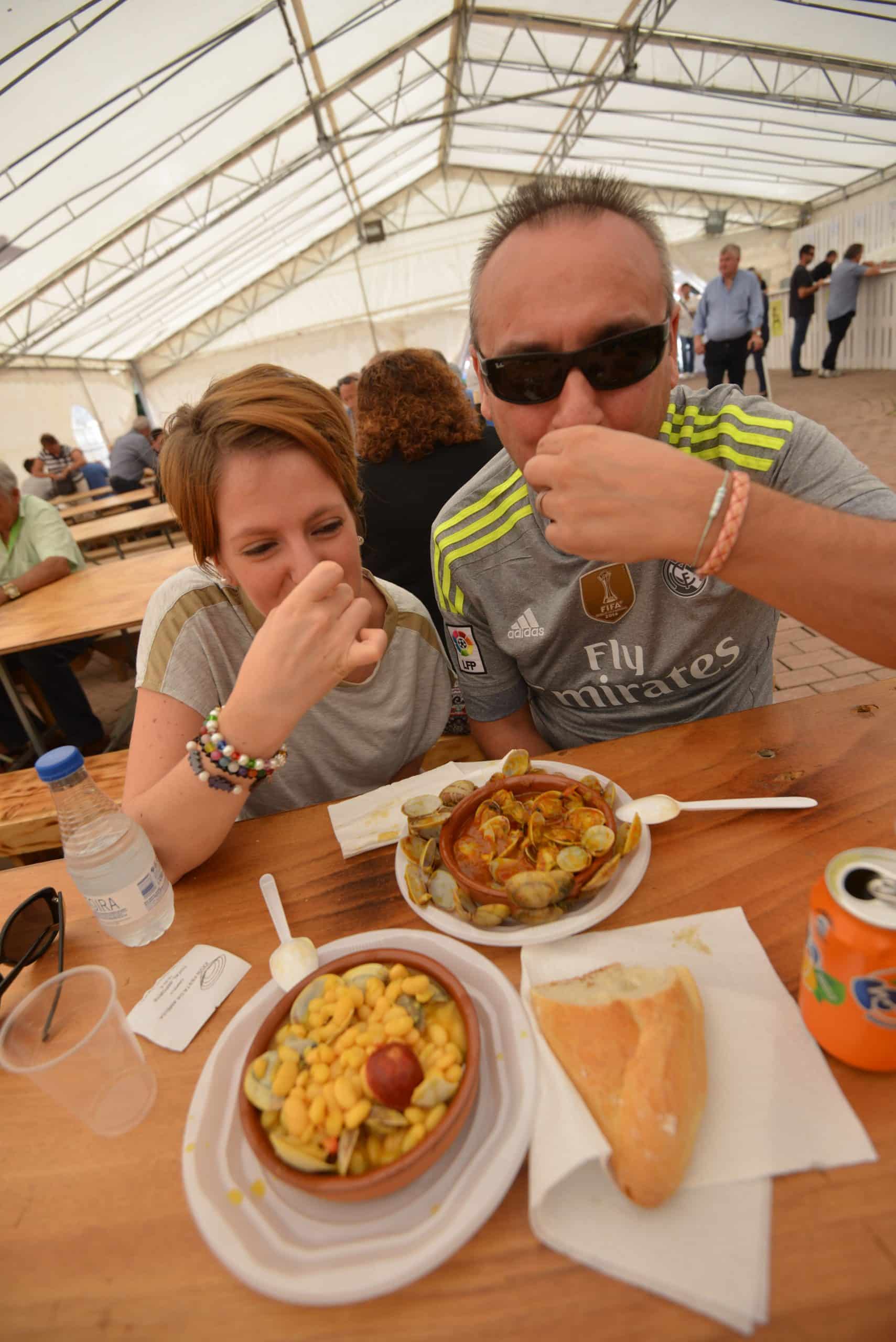
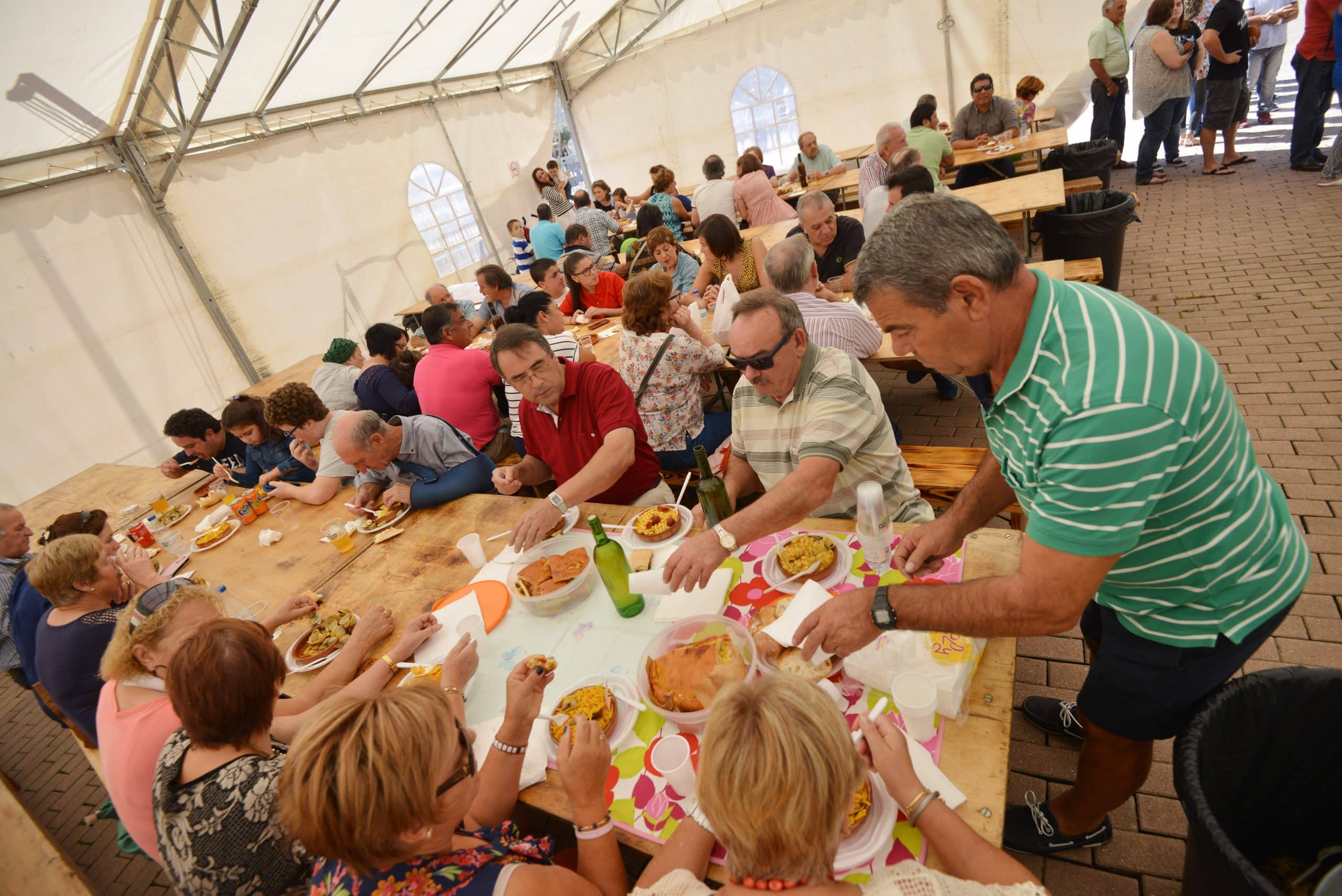
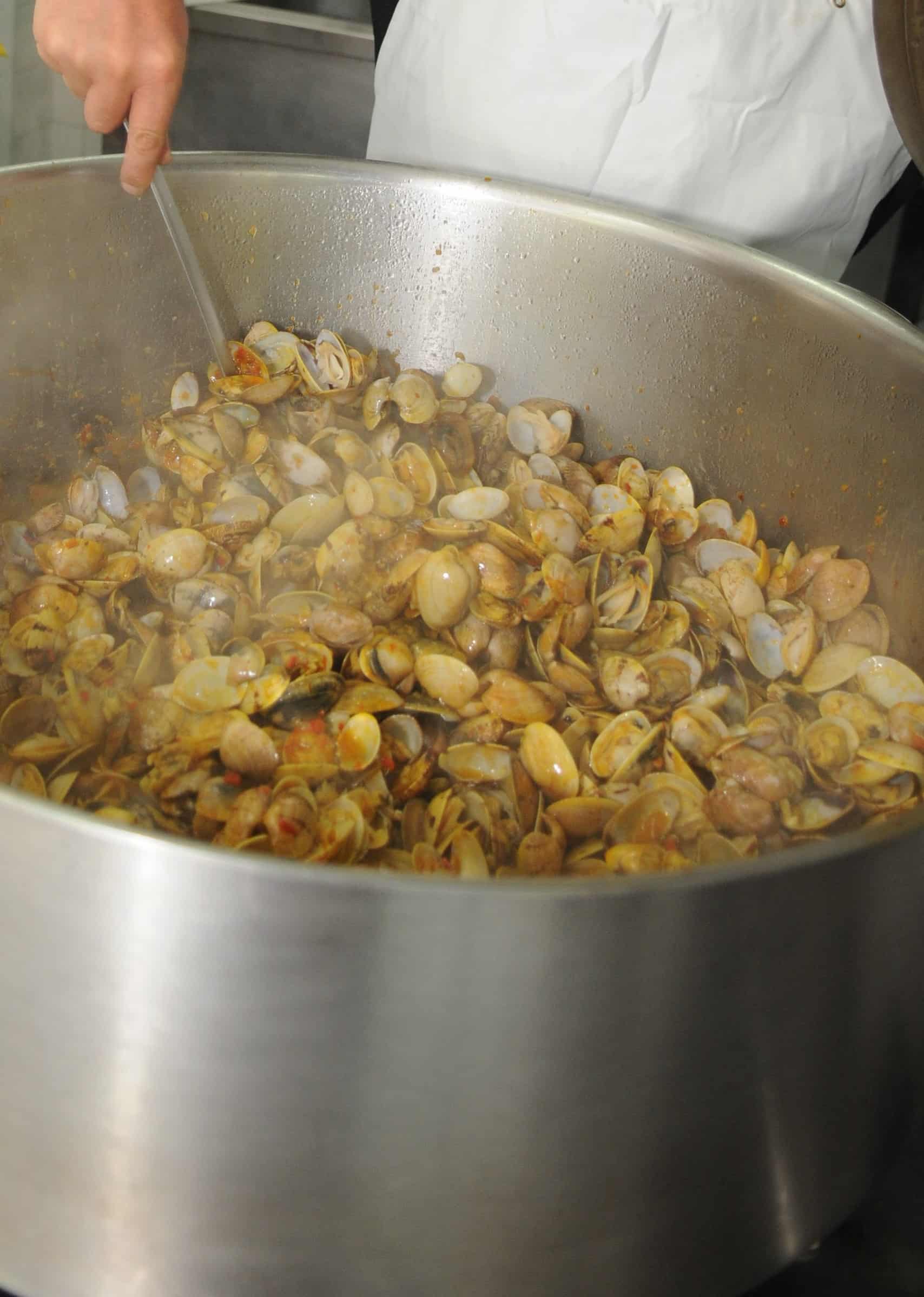
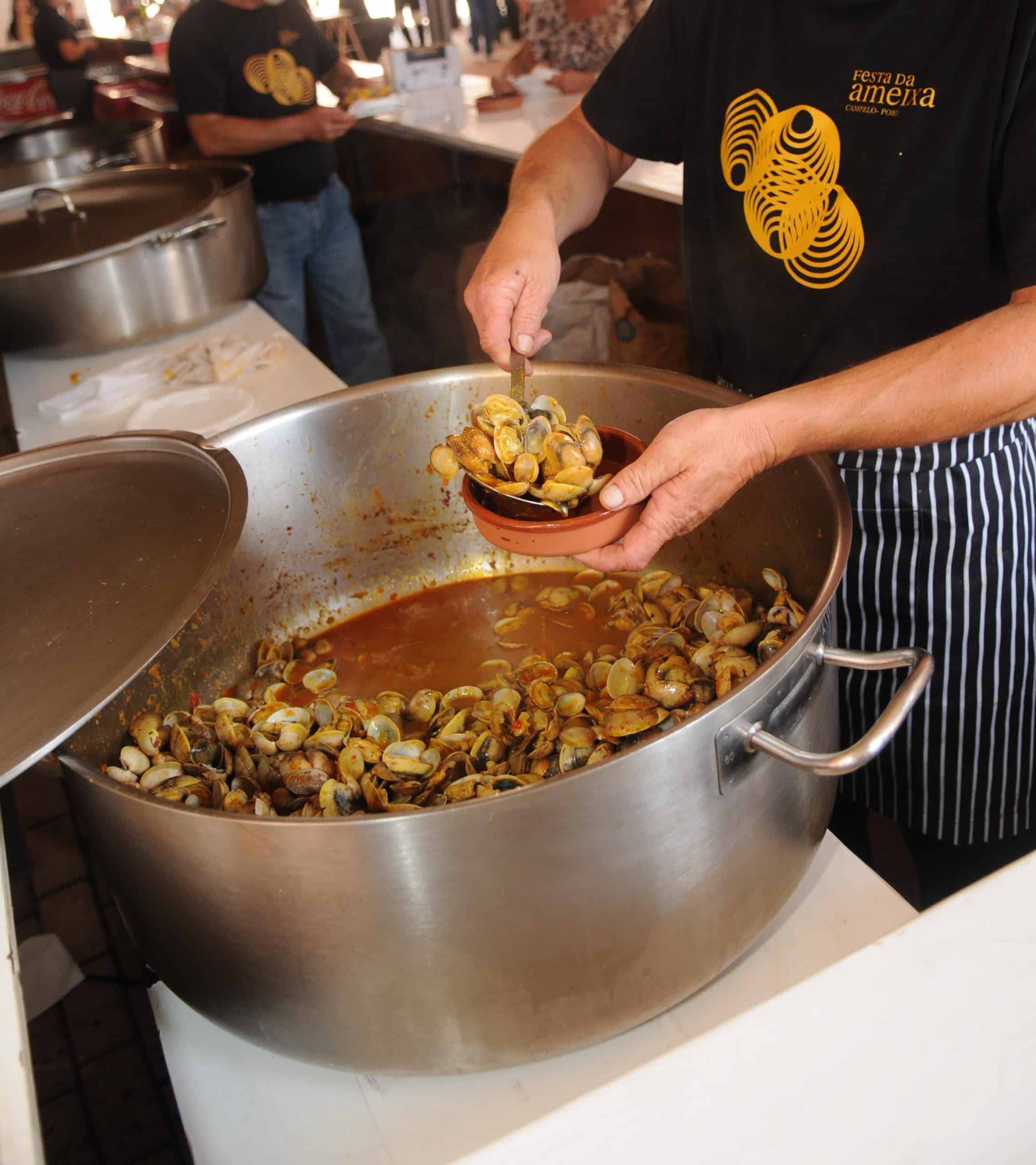
The oldest gastronomic event in Poio was born in 1988 in Campelo, promoted by the Asociación Vecinal de Campelo and the Fishermen’s Association, to promote the grooved carpet shell clam from the Pontevedra estuary. From 1992, the Poio City Council assumed the organization of the festival, which is currently celebrated with the tasting of clams (marinara, with noodles or with rice), the tribute to retired shellfish gatherers, traditional music in the Praza da Granxa, performances, concerts, and other leisure activities.
Entroido
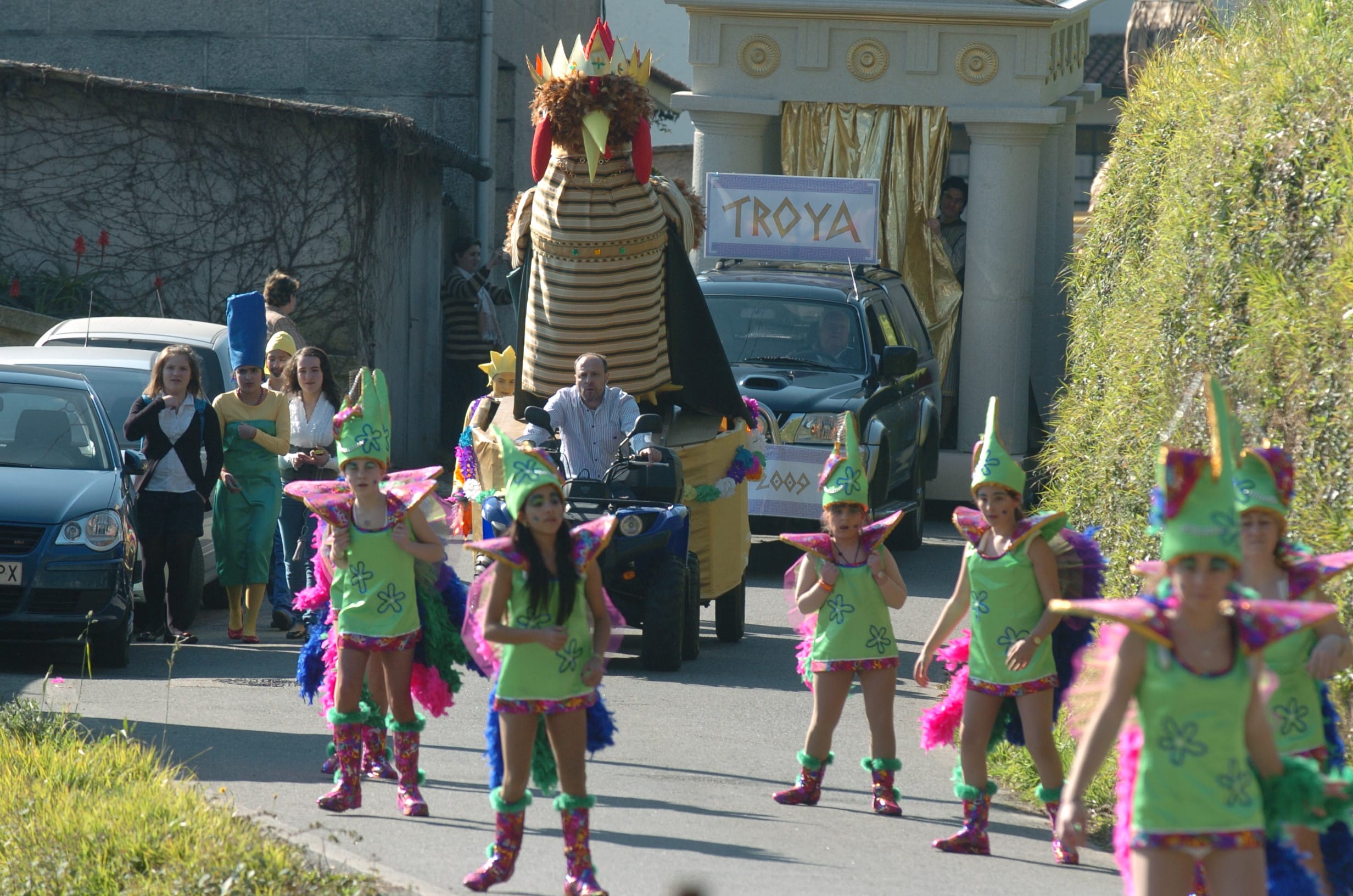
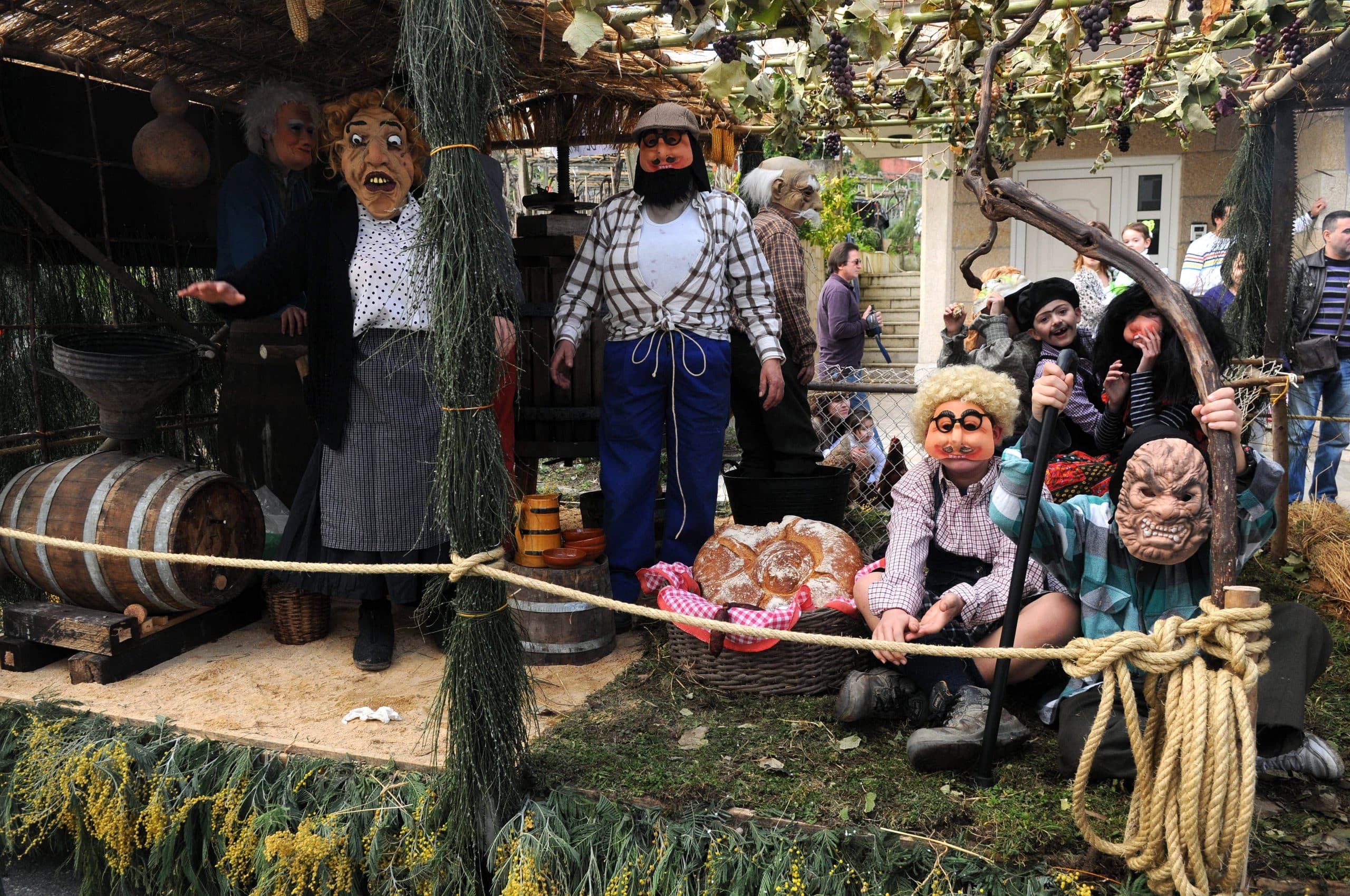
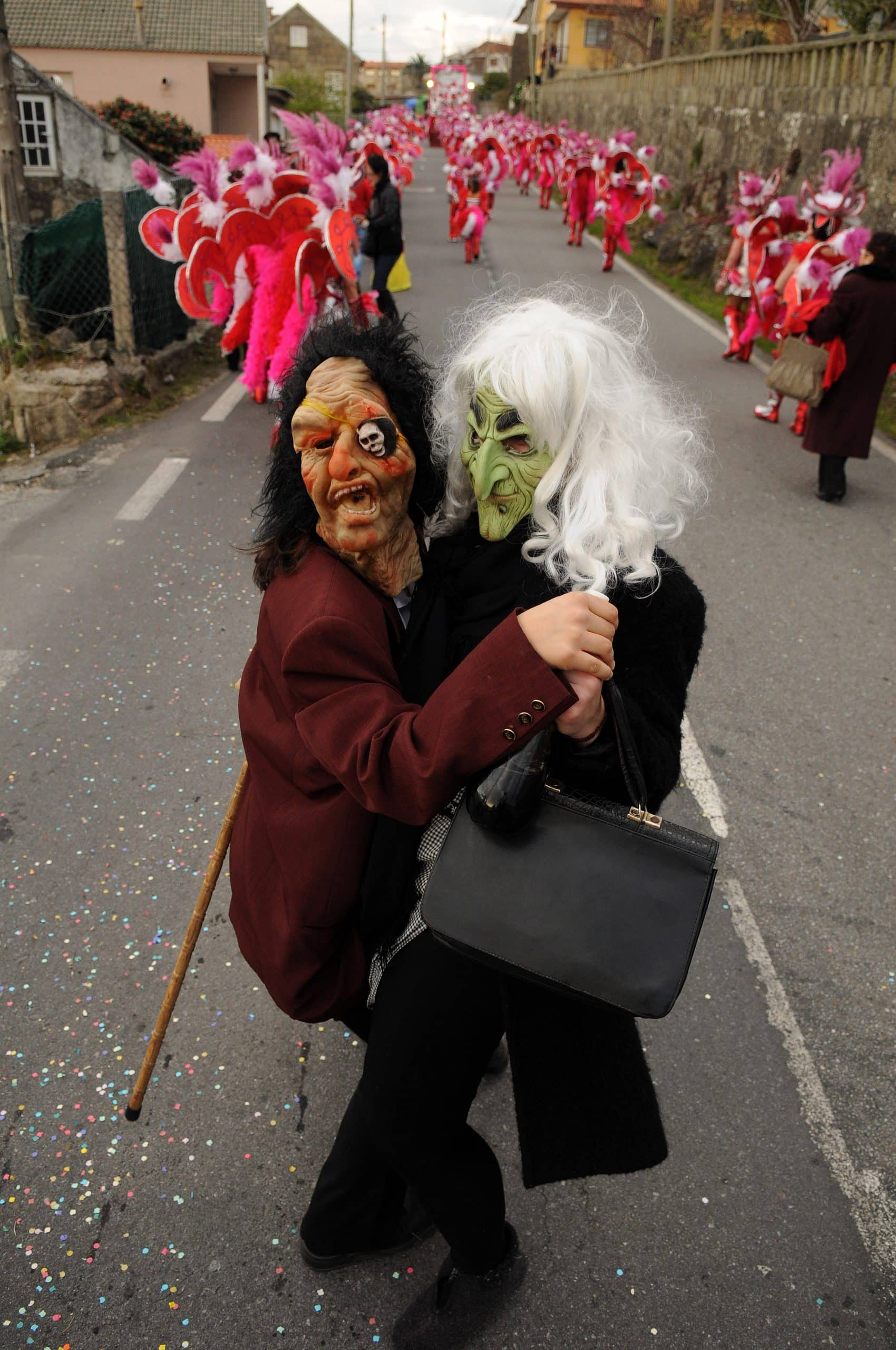
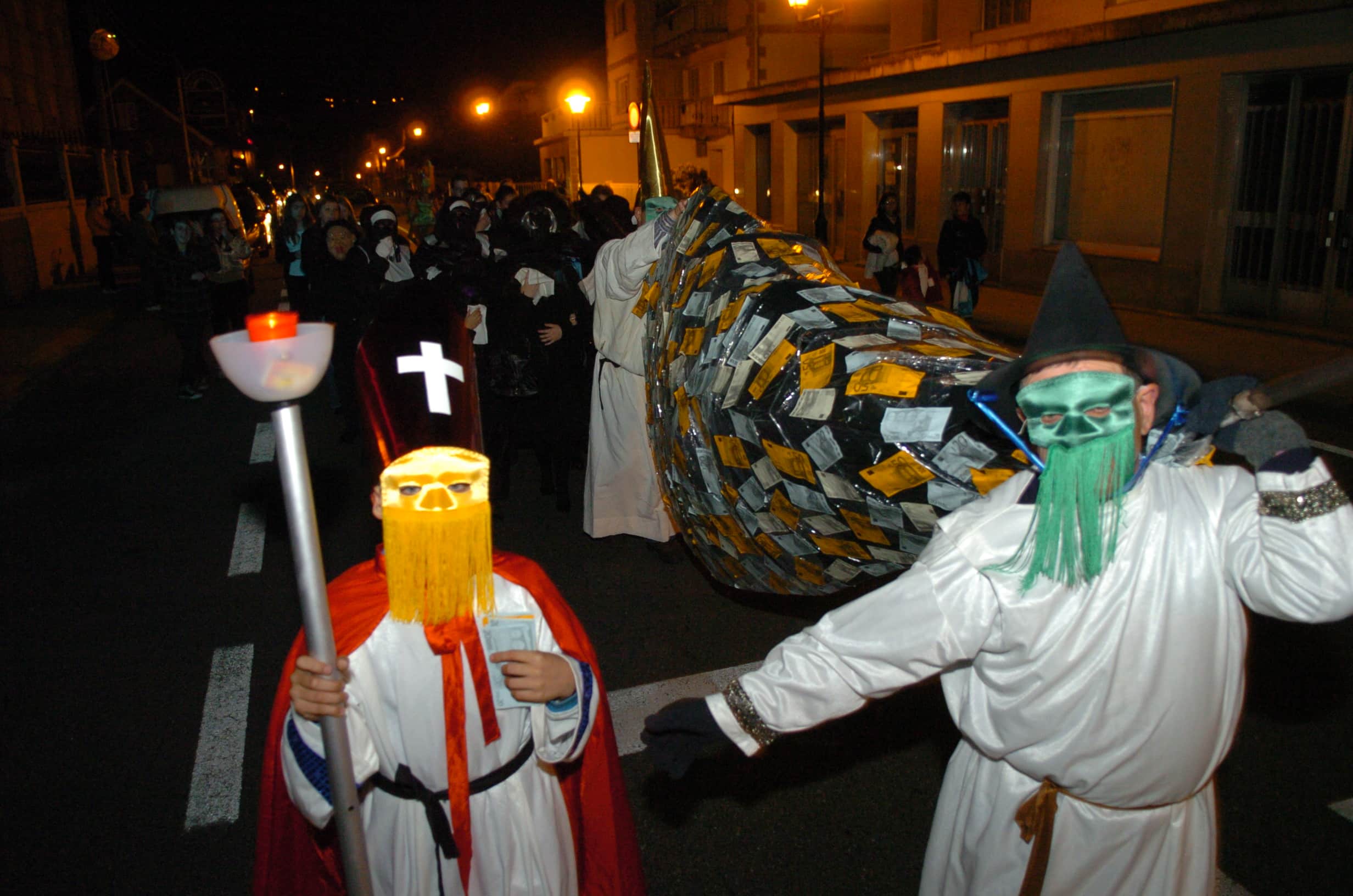
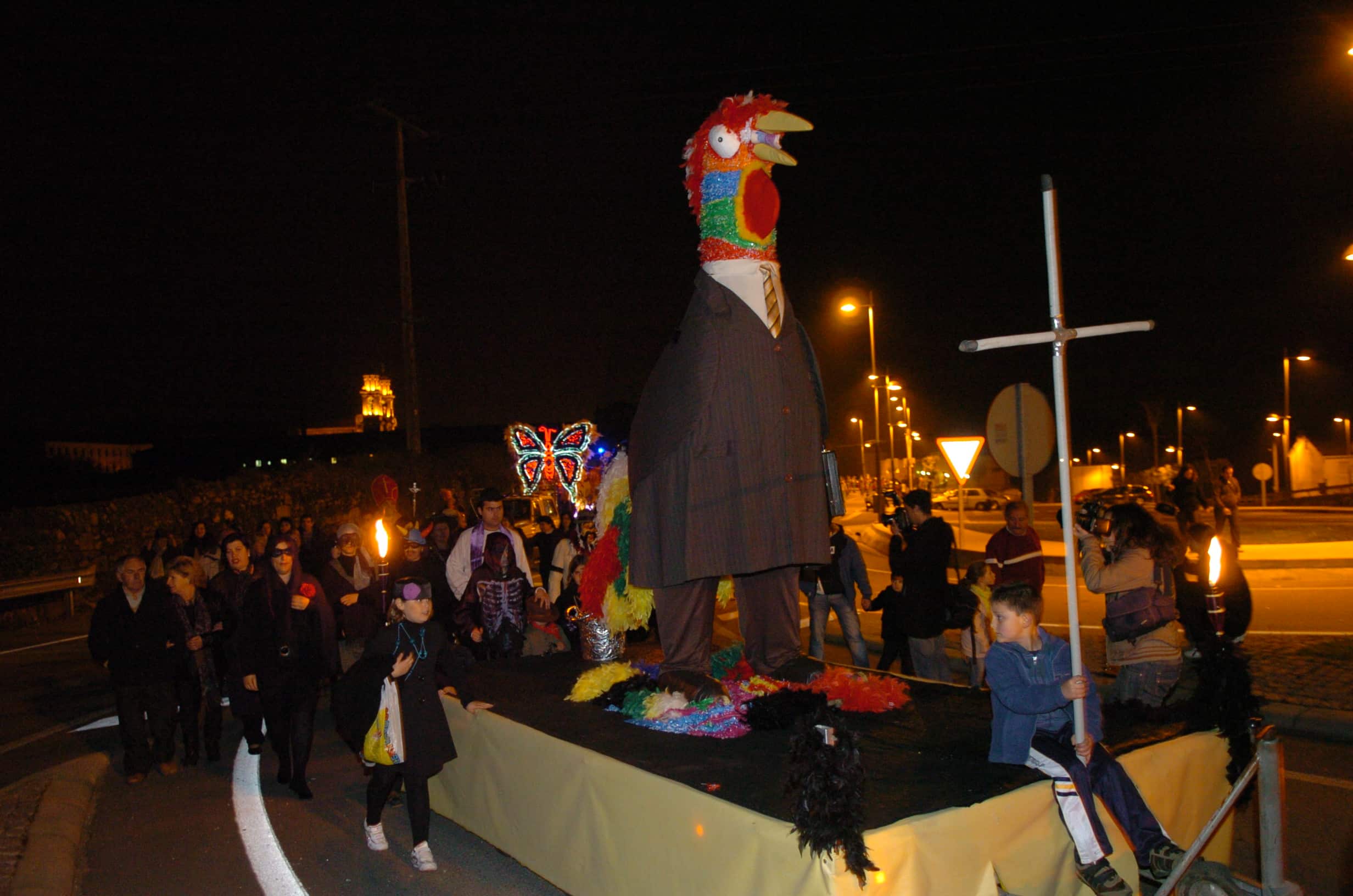
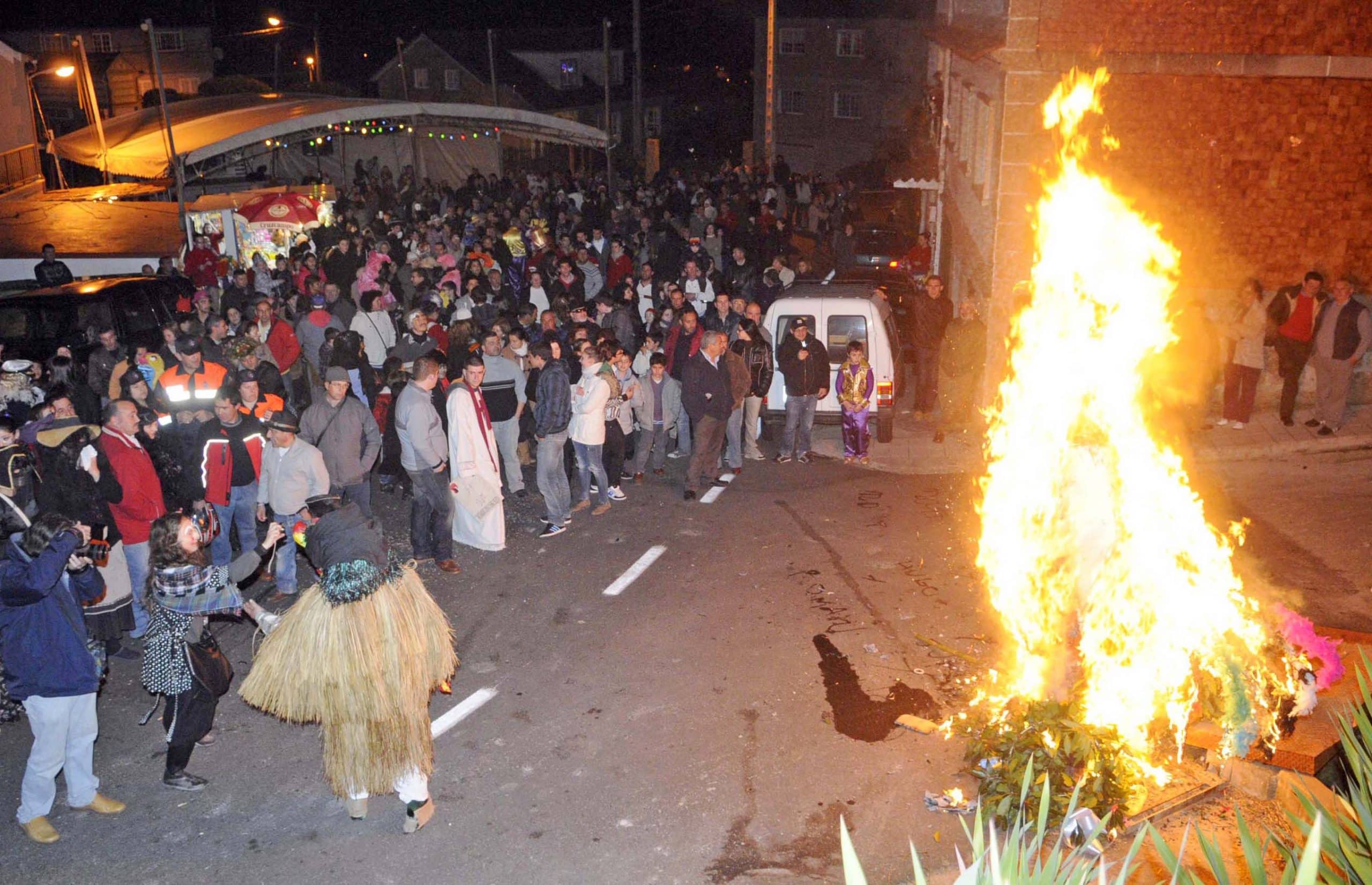
Popular carnival festival of great tradition in Galicia, which begins three days before Ash Wednesday. It is a time of fun and mockery in Poio, where the Galo Fodorico and the Galo Bruxo are protagonists for their uniqueness and their roots.
On the morning of the first Sunday, the Galo Bruxo (Witch Rooster) parades through Samieira, and in the afternoon the carnival parade is held in San Xoán de Poio with the Galo Fodorico.
Since 2012, the Festa dos Choqueiros, the traditional carnival figure dressed in outlandish clothes, has been incorporated into the burial of the Galo Fodorico. The contest in the Plaza de Arís, which revives the tradition of dressing up in old and striking clothes, is accompanied by typical food of the time enlivened with music and dance. Similar celebrations are the burials of the Berberecho (cockle) in San Salvador and the Galo Bruxo of Samieira, where the Filloa festival is also celebrated.
Costume dances, activities, and parades organized by neighborhood associations such as the Enterro do Mexillón (Burial of the Mussel) in Combarro, make the Poio carnival one of the most complete, lively, and extensive in the region.
Os Maios (may 1)
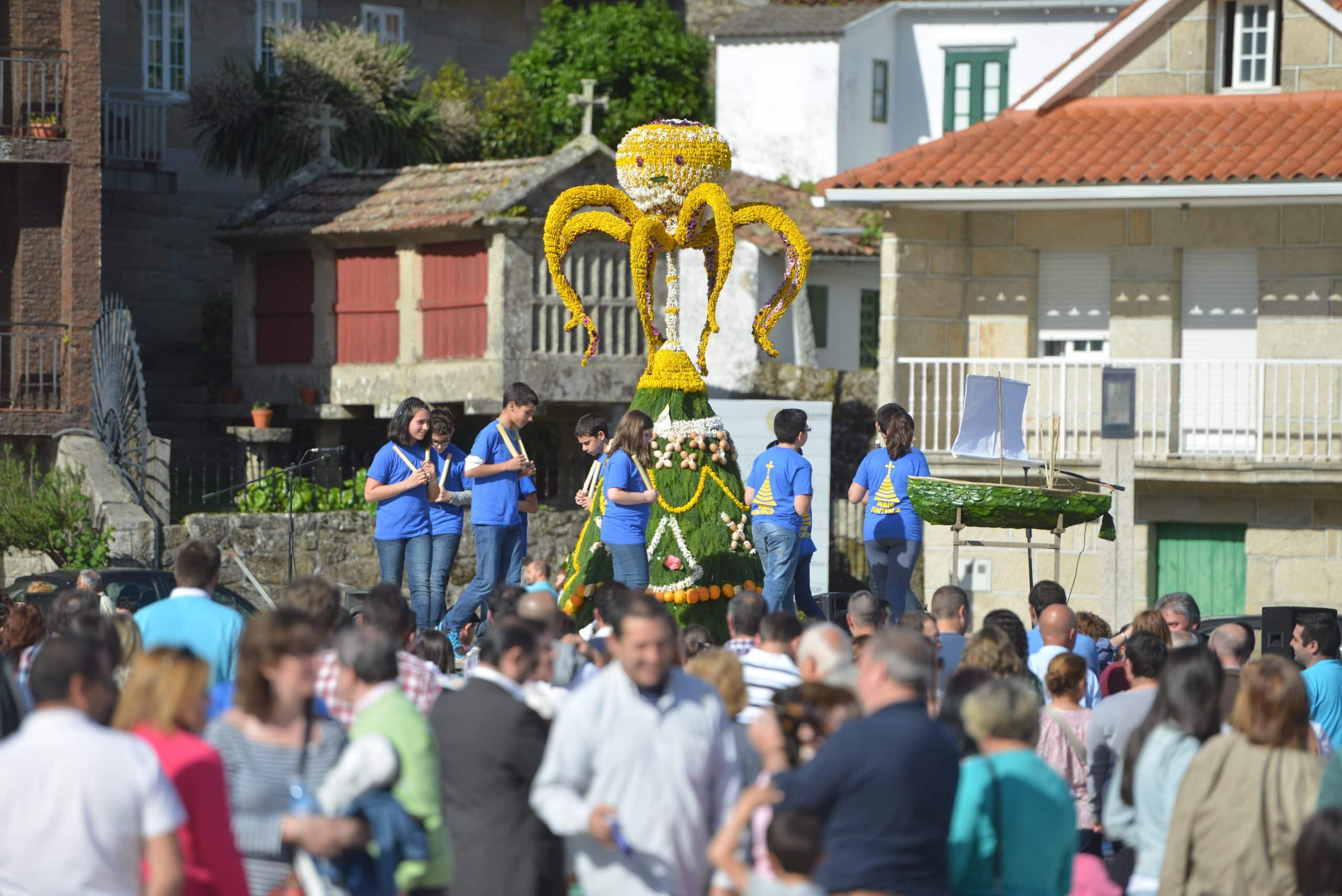
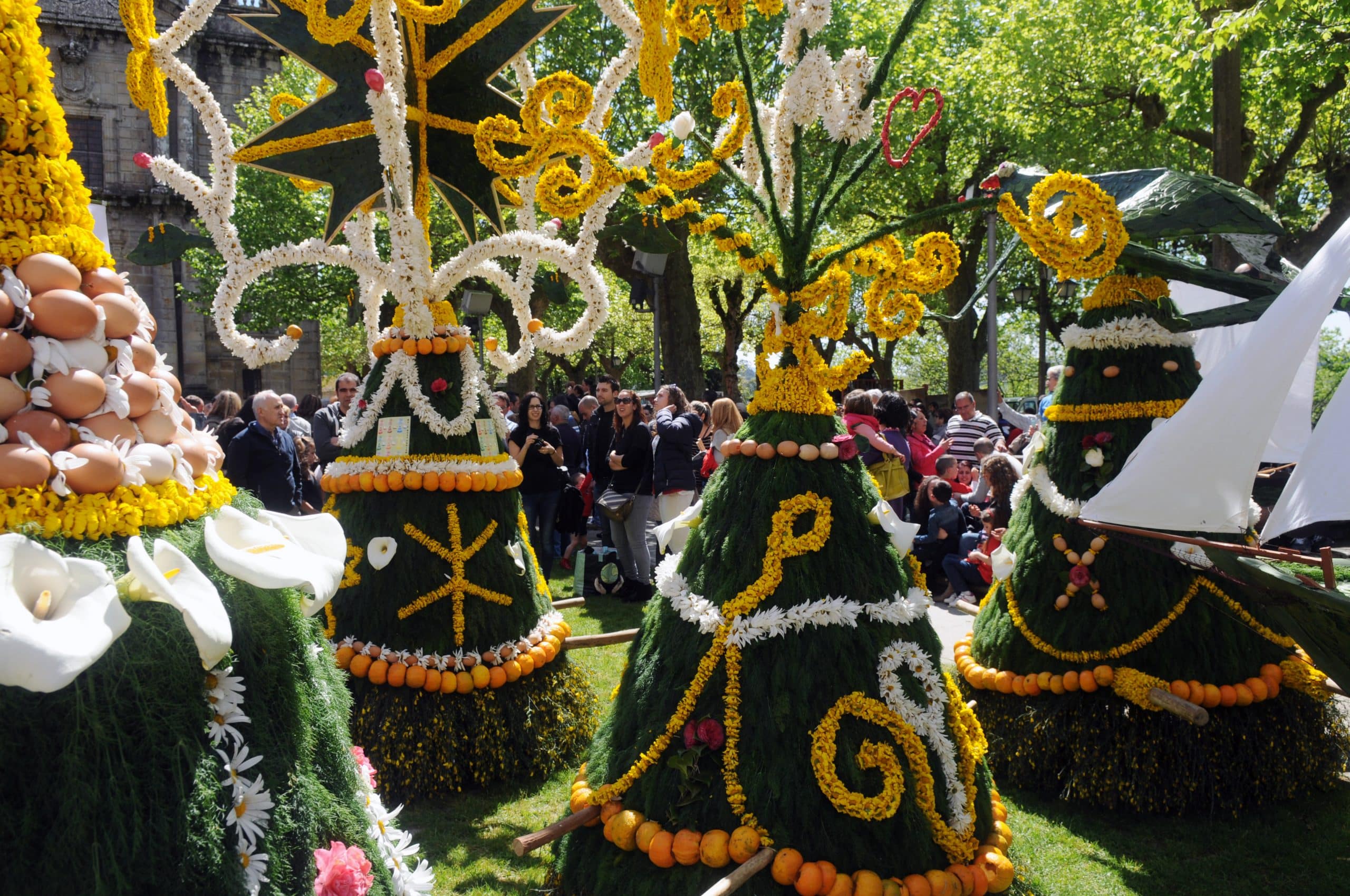
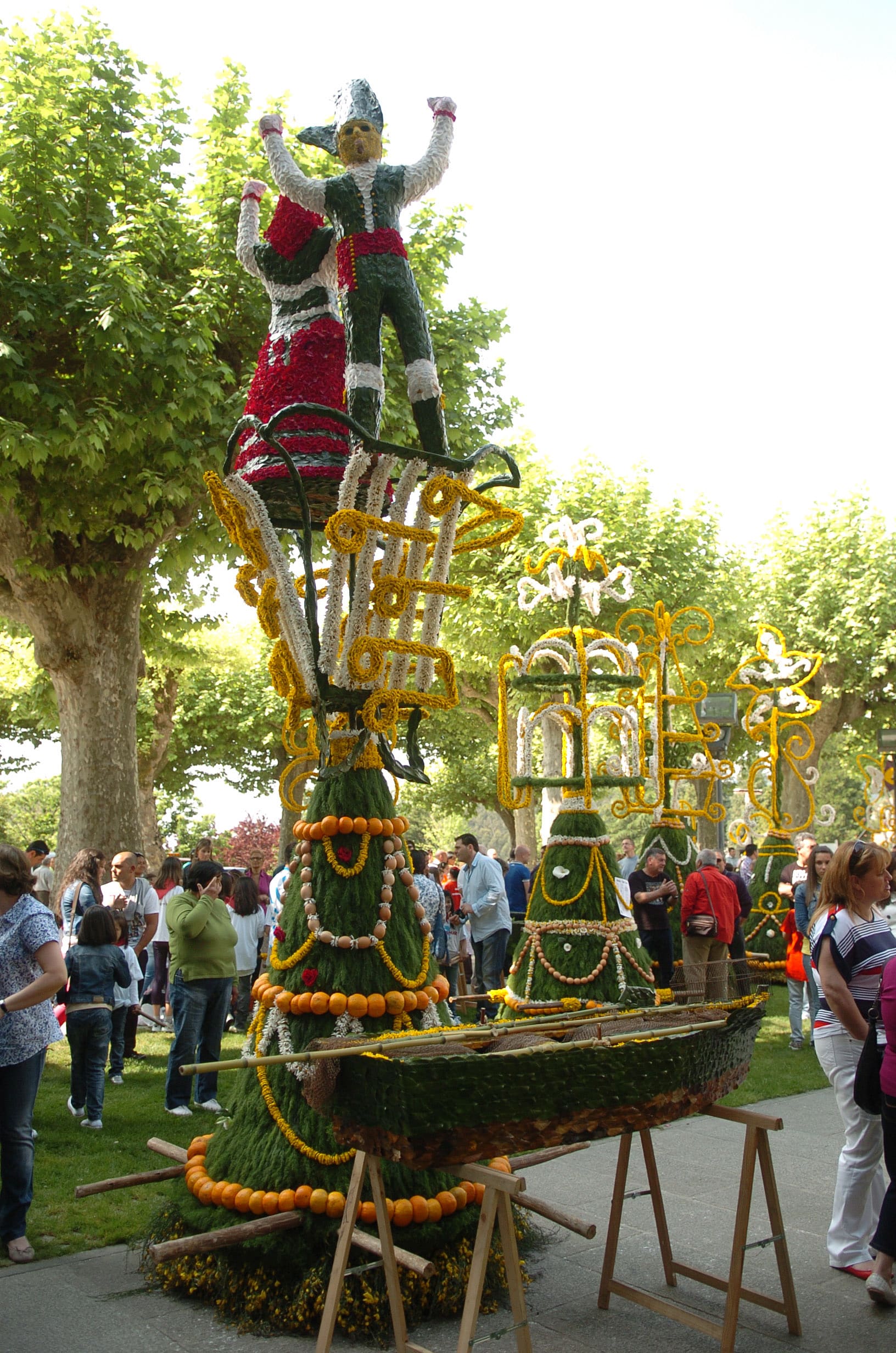
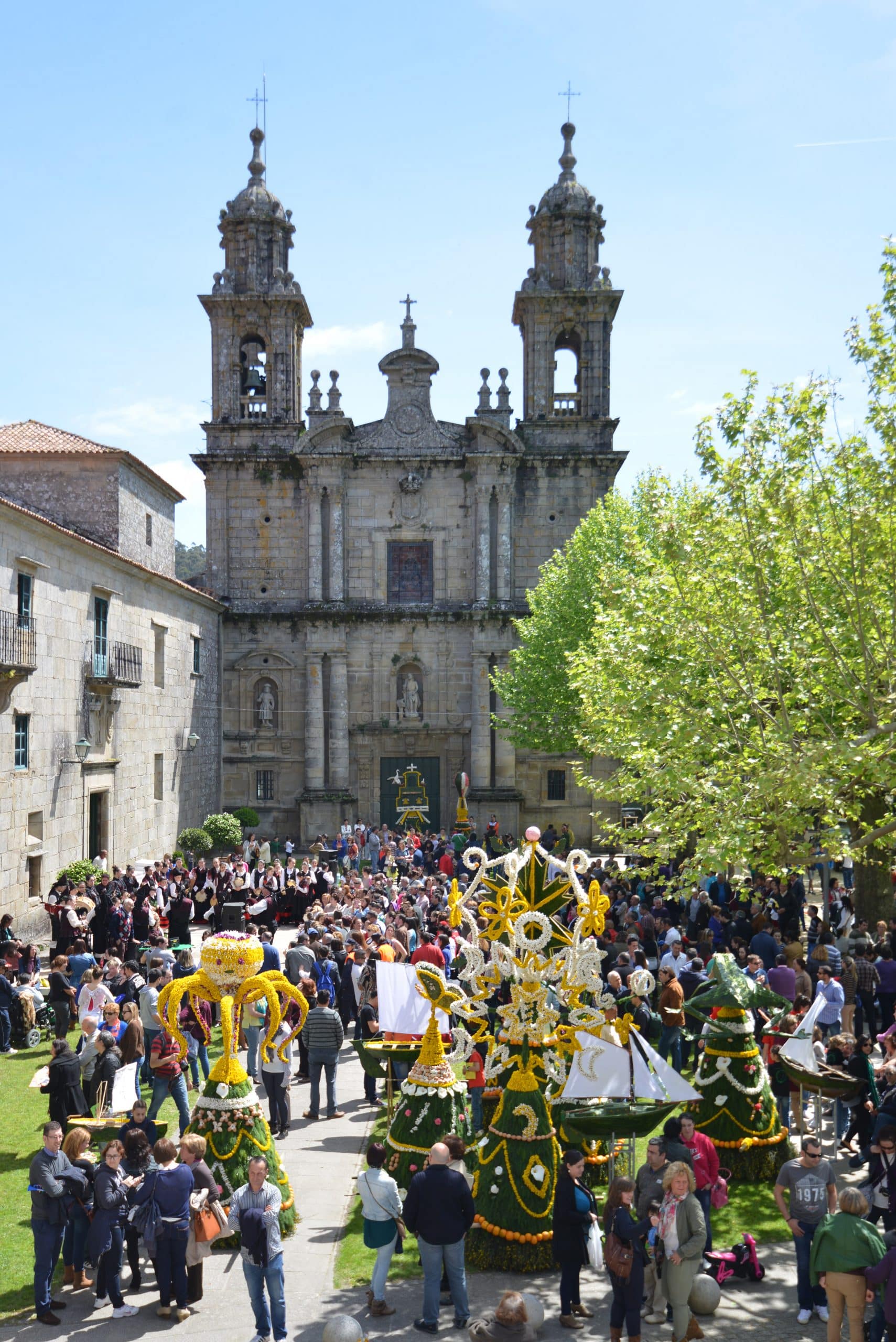
The square of the Monastery of San Xoán is filled with vegetation, color, and music to celebrate the ancestral festival that welcomes spring. A colorful contest is organized at noon in which the best compositions are awarded. In Poio, this intergenerational festival is deeply rooted. Highlights include the crowns, the representations of boats, and the satirical verses that review the events that have occurred throughout the year. In the afternoon, the participating maios move to the Praza de Chousa de Combarro, where you can enjoy their exhibition and performance again.
Festa Do Cabalo (End of August)
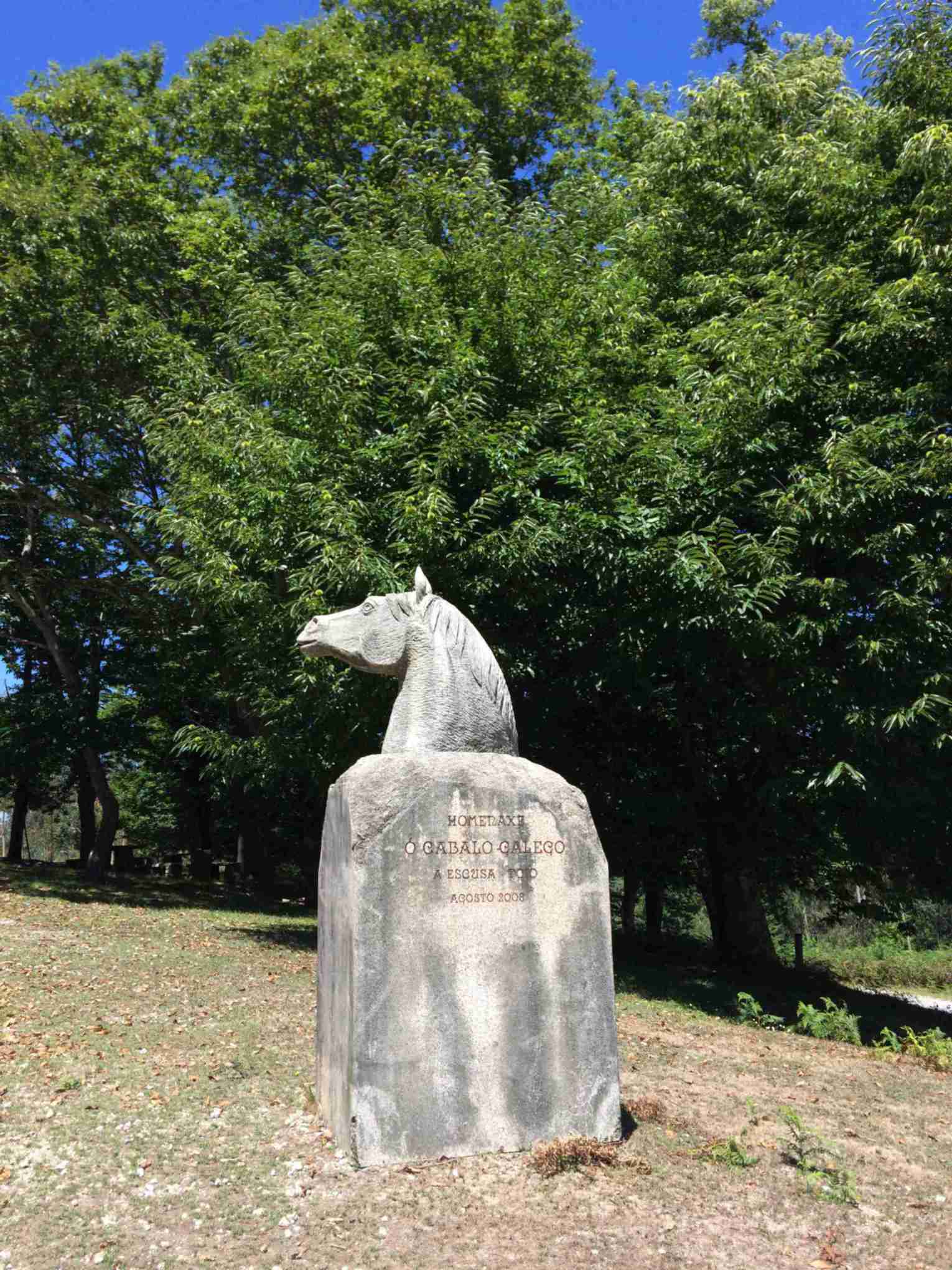
This popular festival is celebrated on the A Escusa mountain, located on Mount Castrove (San Xoán), in the Communities of Montes de Poio and Meis. Known as the “Rapa das bestas”, it is the time of year when the aloitadores come down from the mountain to the wild horses to proceed with their marking and sale of foals in the enclosed area called “curro”. The festival consists of lassoing and seizing the horses to later cut their manes. For this, the young people use only the strength of their arms and legs in a hand-to-hand fight with the animal.
Magosto (November)
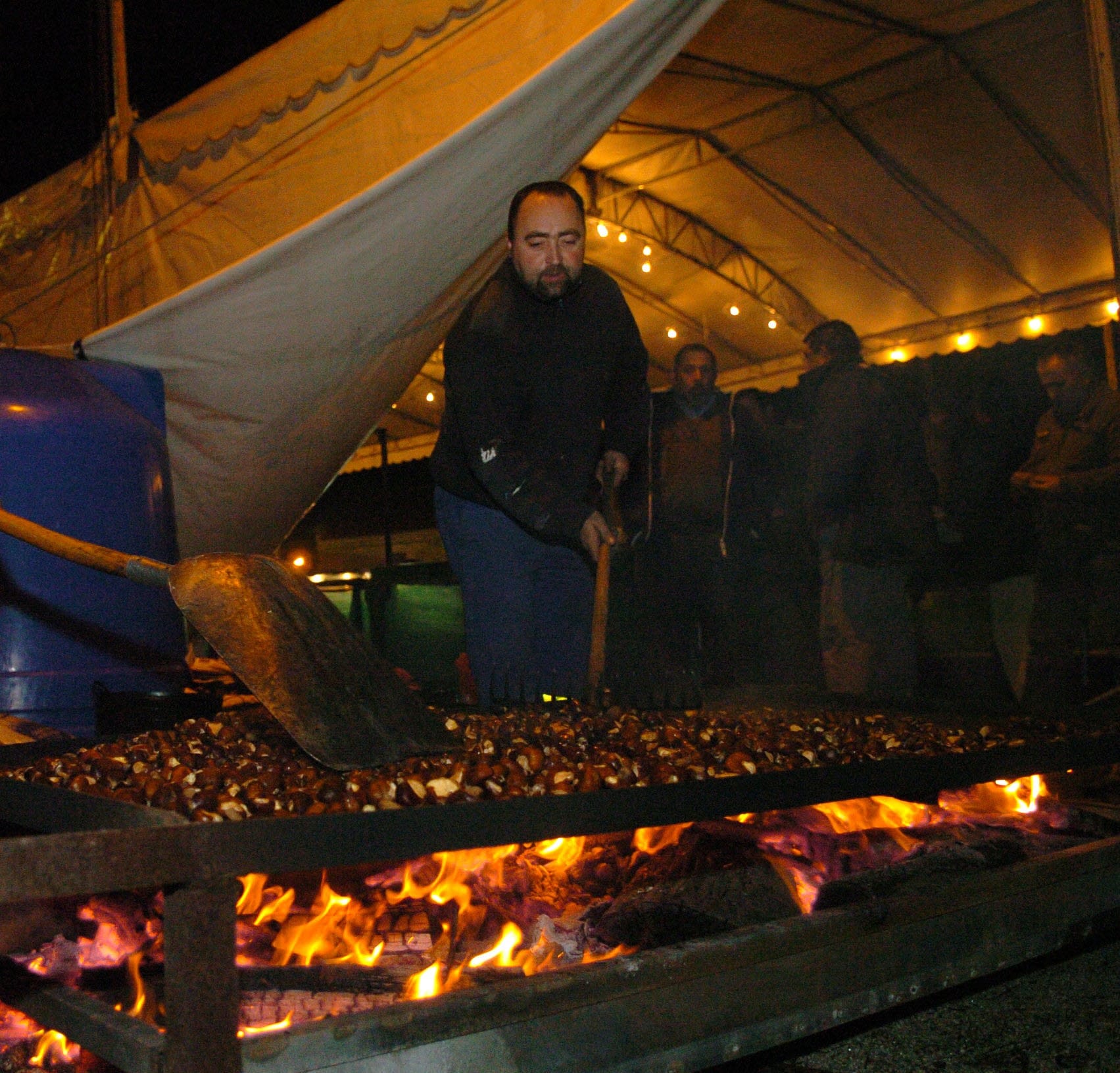
Autumn festival that is celebrated in all the parishes with a tasting of roasted chestnuts, young wine, and traditional music. The Chestnut Festival of San Martiño (in San Xoán de Poio) stands out, which takes place on the eve of November 11, coinciding with the feast of its saint.
Festa Do Mar (End of August)
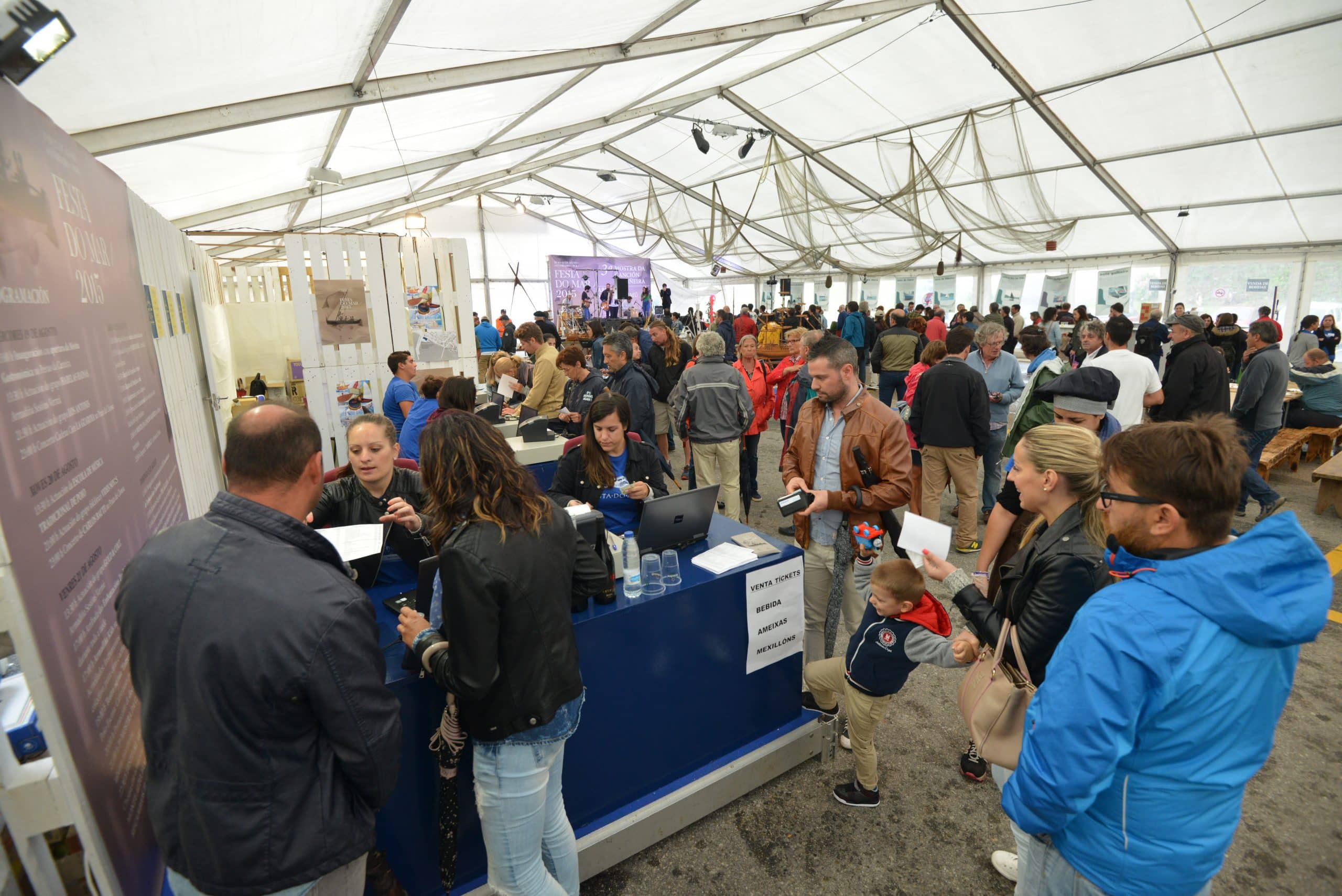
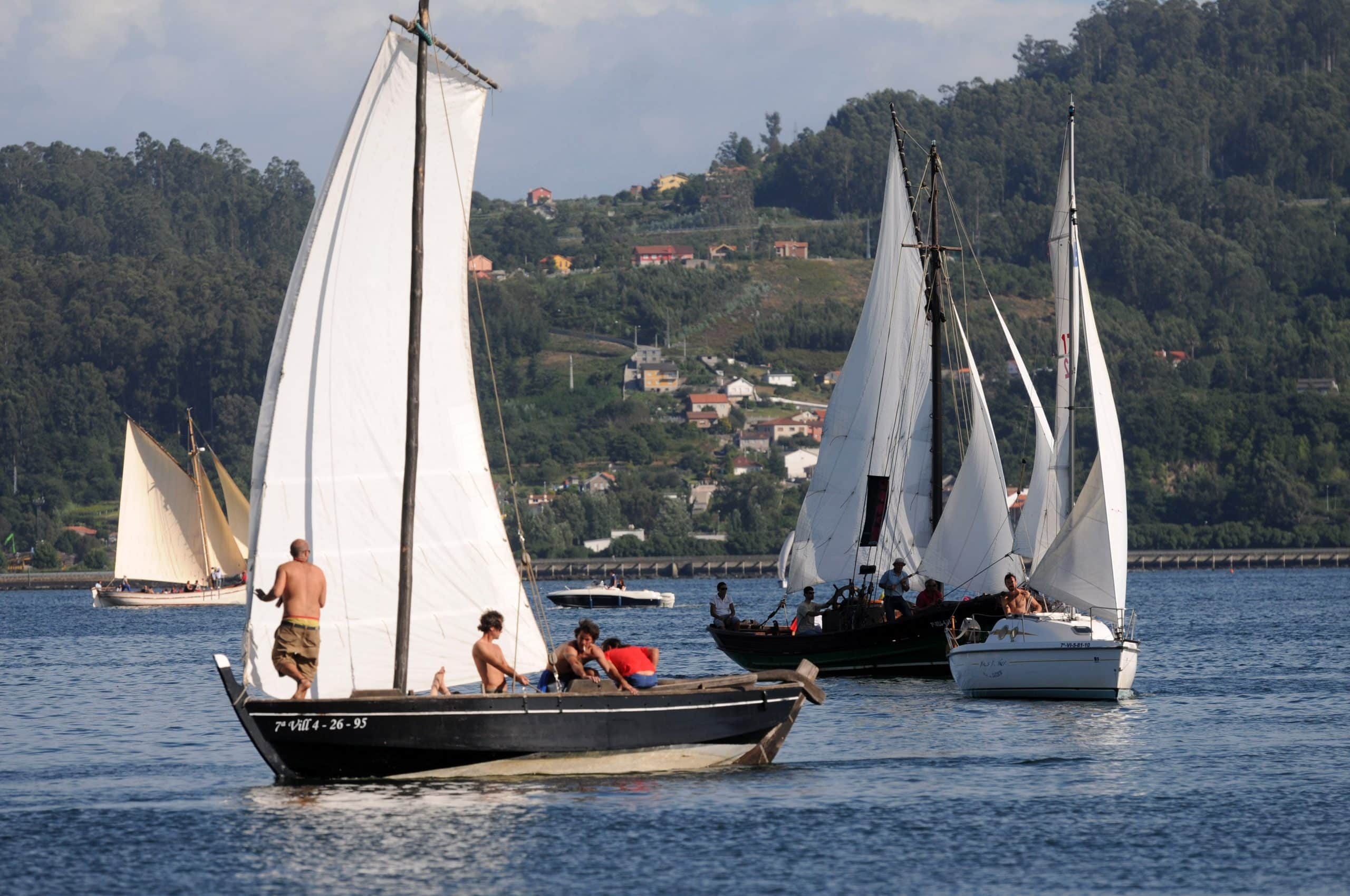
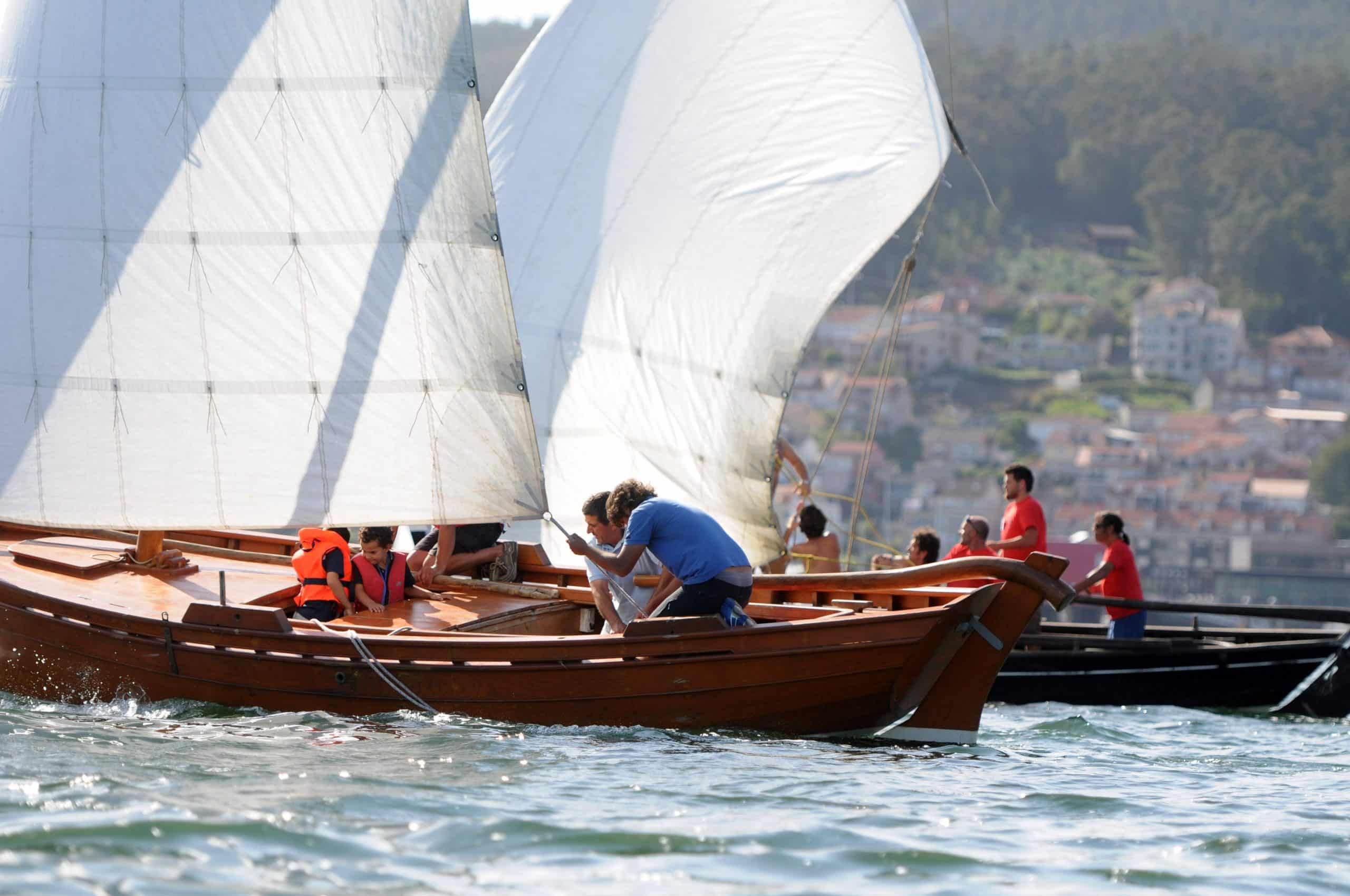
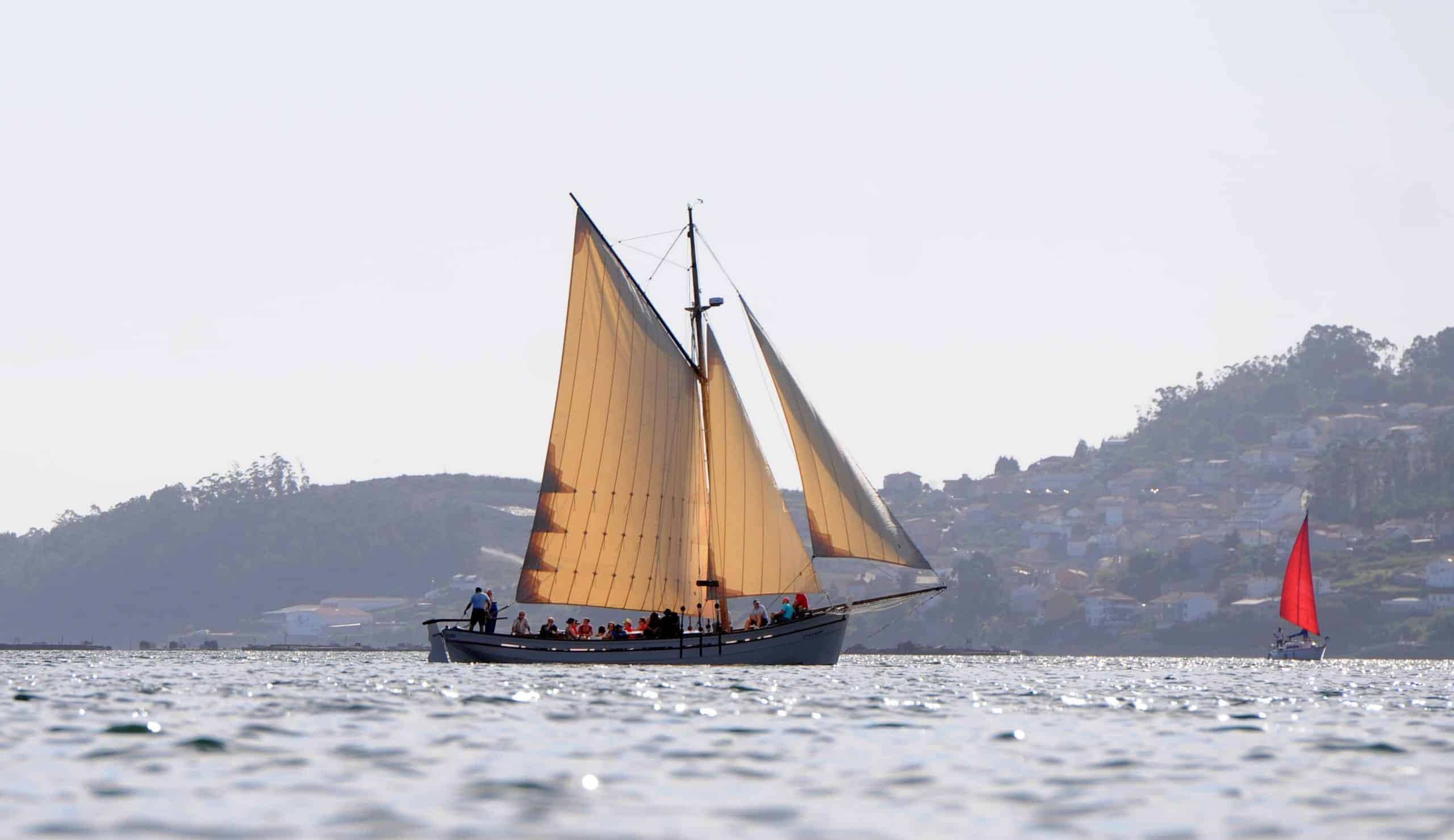
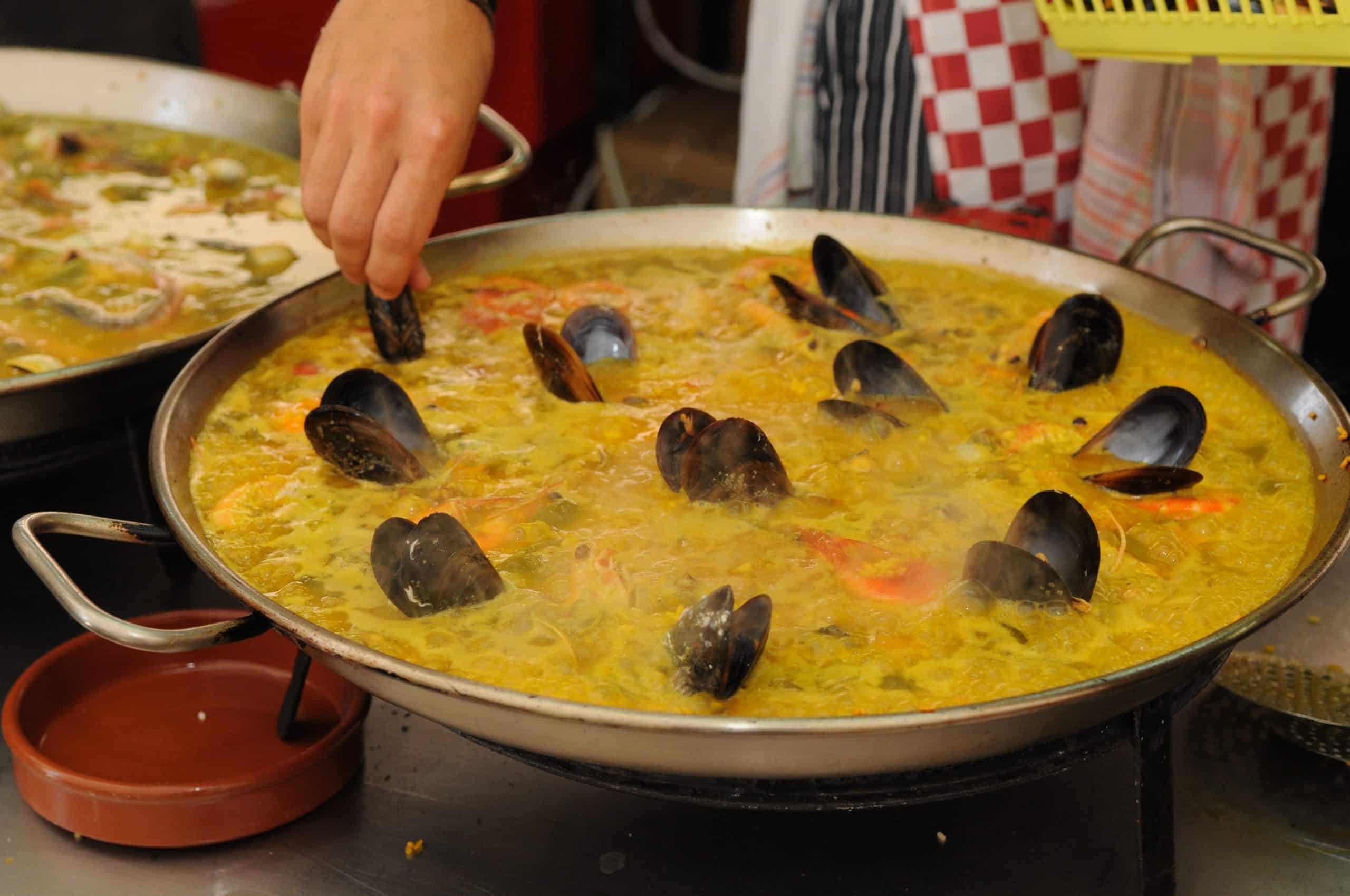
Since 2001, Combarro has hosted an event that combines gastronomy, music, and maritime culture with a wide range of events for all types of audiences.
The program of this festival offers various activities (music, conferences, exhibitions, gastronomy, performances…) among which the “Concentration of Traditional Boats” organized by the Club Mariño A Reiboa and the Festival “Armadiña Rock” organized by the Asociación cultural, deportiva y medioambiental Armadiña.
Samaín in Campelo (End of October)
The population of Campelo (San Xoán), together with the Asociación de Mulleres Arela, celebrates the festival of pagan origin of Samaín on the weekend before November 1 in the Praza da Granxa and its surroundings. The facades of their houses and streets are adorned and decorated with elements typical of this time of year, such as pumpkins.
In this event, aimed at all ages, workshops, contests, and animation activities are held. At nightfall, around 7:30 p.m., the “corredoira” or parade of terror begins, in which children over five years of age participate, accompanied by an adult, tour the town. A jury awards the best decorated house on the occasion of this celebration.